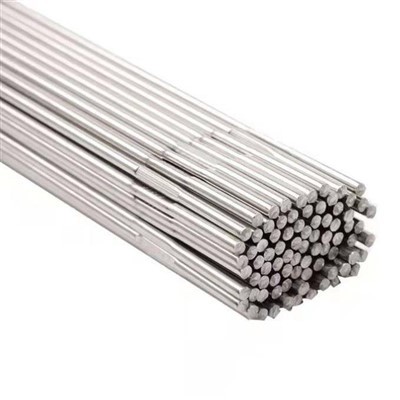
Titanium wire is a versatile and indispensable material in various industries due to its excellent properties such as high strength, low density, and corrosion resistance. As a titanium wire supplier, I have in - depth knowledge of the different types of titanium alloys used to make titanium wire. In this blog, I will explore these alloy types and their unique characteristics.
Commercially Pure Titanium Alloys
Commercially pure (CP) titanium alloys are among the most commonly used materials for titanium wire production. These alloys are classified into four grades (Grade 1 - 4), each with a slightly different composition and set of properties.
Grade 1 is the most ductile of the CP titanium alloys. It has the lowest strength but the highest formability. This makes it ideal for applications where the wire needs to be bent and shaped easily, such as in jewelry making. The high purity of Grade 1 titanium wire also gives it excellent corrosion resistance, especially in environments containing chlorides. You can find high - quality Grade 1 Titanium Alloy Wire in our product range.
Grade 2 is a step up in strength compared to Grade 1 while still maintaining good formability. It is widely used in chemical processing, marine, and architectural applications. The wire made from Grade 2 titanium alloy can withstand harsh chemical environments and is often used for components like fasteners and springs.


Grade 3 has even higher strength than Grade 2. It is suitable for applications where a balance between strength and corrosion resistance is required, such as in the aerospace industry for non - structural components. The increased strength of Grade 3 titanium wire allows it to handle more demanding mechanical loads.
Grade 4 is the highest strength of the CP titanium alloys. It is used in applications where high strength and good corrosion resistance are essential, such as in medical implants and some high - performance industrial equipment.
Alpha - Beta Titanium Alloys
Alpha - beta titanium alloys are another important category for titanium wire manufacturing. They contain both alpha and beta phases, which can be heat - treated to achieve a wide range of mechanical properties.
Ti - 6Al - 4V (Grade 5) is the most widely used alpha - beta titanium alloy. It has a high strength - to - weight ratio, excellent fatigue resistance, and good weldability. In aerospace applications, Ti - 6Al - 4V titanium wire is used for critical components such as aircraft engine parts and airframe structures. The wire's ability to maintain its mechanical properties at high temperatures makes it suitable for these demanding applications. Our Titanium Line includes a variety of Ti - 6Al - 4V titanium wire products.
Ti - 6Al - 2Sn - 4Zr - 2Mo (Grade 29) is a high - strength alpha - beta alloy with good creep resistance and fracture toughness. It is often used in the aerospace and defense industries for applications where components need to withstand high stress and temperature variations over long periods. The wire made from this alloy can be used in the construction of rocket engines and high - performance aircraft parts.
Beta Titanium Alloys
Beta titanium alloys are known for their high strength, excellent formability in the solution - treated state, and good corrosion resistance.
Ti - 13V - 11Cr - 3Al is a well - known beta titanium alloy. It has very high strength and can be cold - worked to a significant degree. This alloy is used in applications where high strength and complex shapes are required, such as in the production of high - end sports equipment and some specialized medical instruments. The wire made from Ti - 13V - 11Cr - 3Al can be formed into intricate shapes without sacrificing its strength.
Ti - 3Al - 8V - 6Cr - 4Mo - 4Zr (Beta C) is another high - performance beta titanium alloy. It offers a combination of high strength, good ductility, and excellent fatigue resistance. Beta C titanium wire is used in aerospace, automotive, and medical applications. In the aerospace industry, it can be used for components that need to withstand high - cycle fatigue, such as landing gear parts.
Selection Considerations
When choosing the right titanium alloy for wire production, several factors need to be considered.
Mechanical Requirements: If the application requires high strength, alloys like Ti - 6Al - 4V or Grade 4 CP titanium may be the best choice. For applications where formability is crucial, Grade 1 CP titanium or some beta titanium alloys would be more suitable.
Environmental Conditions: In corrosive environments, CP titanium alloys or alloys with high corrosion - resistant elements are preferred. For example, in marine environments, Grade 2 CP titanium wire can resist the corrosive effects of saltwater.
Cost: Commercially pure titanium alloys are generally more cost - effective than some of the high - performance alpha - beta and beta titanium alloys. However, the cost must be balanced against the performance requirements of the application.
Our Capabilities as a Supplier
As a titanium wire supplier, we are committed to providing high - quality titanium wire products made from a variety of alloys. We have advanced manufacturing facilities that allow us to produce titanium wire with precise diameters and lengths. Our quality control system ensures that each batch of wire meets the strictest industry standards.
Whether you need a small quantity of specialty titanium wire for a research project or a large - scale supply for industrial production, we can meet your needs. We also offer customized solutions, such as special surface treatments and packaging options, to ensure that our products are tailored to your specific requirements.
Conclusion
The choice of titanium alloy for wire production depends on a variety of factors, including mechanical requirements, environmental conditions, and cost. Commercially pure titanium alloys, alpha - beta titanium alloys, and beta titanium alloys each have their own unique properties and applications. As a reliable titanium wire supplier, we have the expertise and resources to provide you with the right titanium wire for your specific needs.
If you are interested in purchasing titanium wire or have any questions about our products, please feel free to contact us for further discussion and negotiation. We look forward to working with you to meet your titanium wire requirements.
References
- Boyer, R. R., Welsch, G., & Collings, E. W. (1994). Materials Properties Handbook: Titanium Alloys. ASM International.
- Donachie, M. J. (2000). Titanium: A Technical Guide. ASM International.