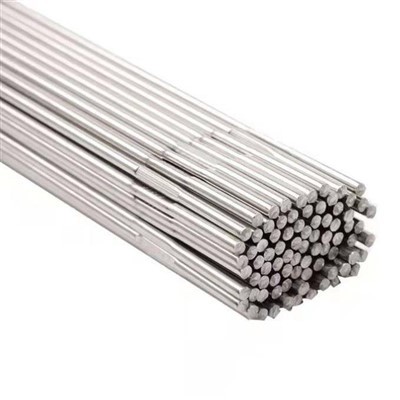
As a supplier of Titanium Alloy Wire, I am often asked about the shear strength of this remarkable material. Shear strength is a critical property, especially in applications where the wire will be subjected to forces that cause one part of the material to slide past another. In this blog post, I'll delve into the details of what shear strength is, how it applies to titanium alloy wire, and the factors that can influence it.
Understanding Shear Strength
Shear strength refers to the maximum amount of shear stress a material can withstand before it fails. Shear stress occurs when two parallel forces act in opposite directions on a material, trying to cut or slide one part of the material relative to another. For example, when you use a pair of scissors to cut a piece of paper, you're applying shear stress. In the context of titanium alloy wire, shear strength is crucial in applications such as fasteners, springs, and aerospace components where the wire may experience lateral forces.


Shear Strength of Titanium Alloy Wire
Titanium alloy wire is known for its excellent strength - to - weight ratio, corrosion resistance, and high shear strength. Different titanium alloys have different shear strengths, which are determined by their chemical composition and the manufacturing process. For instance, Ti - 6Al - 4V, one of the most commonly used titanium alloys, has a relatively high shear strength.
The shear strength of titanium alloy wire can range significantly depending on the alloy type. Generally, it can be anywhere from 200 MPa to over 1000 MPa. This wide range allows for a variety of applications, from lightweight structures where moderate shear strength is sufficient to high - performance aerospace and military applications that require extreme strength.
Several factors influence the shear strength of titanium alloy wire:
- Alloy Composition: The specific elements added to titanium in the alloying process can greatly affect its shear strength. Aluminum, vanadium, and molybdenum are common alloying elements that increase the strength of titanium. For example, the addition of aluminum can form a fine - grained structure that enhances the material's overall strength.
- Heat Treatment: The way the titanium alloy wire is heat - treated can have a significant impact on its shear strength. Heat treatment processes such as annealing, quenching, and aging can alter the microstructure of the wire, leading to changes in its mechanical properties. Annealing, for instance, can relieve internal stresses and improve ductility, while quenching and aging can increase the hardness and shear strength.
- Cold Working: Cold working, such as drawing the wire through a die, can also increase the shear strength of titanium alloy wire. This process aligns the grains in the wire, creating a more uniform and stronger structure. However, excessive cold working can make the wire brittle, so it must be carefully controlled.
Applications of Titanium Alloy Wire Based on Shear Strength
The unique shear strength properties of titanium alloy wire make it suitable for a wide range of applications:
- Aerospace Industry: In the aerospace sector, titanium alloy wire is used in critical components such as landing gear, aircraft frames, and engine parts. The high shear strength and lightweight nature of the wire contribute to the overall performance and fuel efficiency of the aircraft. For example, in the landing gear, the wire needs to withstand high shear forces during takeoff and landing.
- Medical Field: Titanium alloy wire is biocompatible, which makes it an ideal material for medical applications. It is used in surgical implants, orthodontic wires, and staples. In these applications, the wire needs to have sufficient shear strength to maintain its shape and function over time.
- Automotive Industry: The automotive industry uses titanium alloy wire in high - performance engines and suspension systems. The wire's ability to withstand shear forces helps improve the reliability and performance of the vehicle.
Our Services as a Titanium Alloy Wire Supplier
As a supplier of Titanium Alloy Wire, we are committed to providing high - quality products that meet the strictest industry standards. We offer a wide range of titanium alloy wires with different diameters, lengths, and alloy compositions to suit various applications. Our team of experts can assist you in selecting the right wire for your specific needs, taking into account factors such as shear strength, corrosion resistance, and cost.
We use advanced manufacturing processes to ensure the consistent quality of our titanium alloy wire. Our heat treatment and cold - working techniques are carefully optimized to achieve the desired mechanical properties, including shear strength. We also conduct rigorous quality control tests to guarantee that each batch of wire meets our high - quality standards.
In addition to providing high - quality products, we offer excellent customer service. Our sales team is always ready to answer your questions and provide technical support. We understand the importance of timely delivery, so we work hard to ensure that your orders are shipped as quickly as possible.
Why Choose Our Titanium Alloy Wire?
- Quality Assurance: We adhere to strict quality control measures at every stage of the manufacturing process. Our products are tested in state - of - the - art laboratories to ensure that they meet or exceed industry standards for shear strength and other mechanical properties.
- Customization: We understand that different customers have different requirements. That's why we offer customized solutions for titanium alloy wire. Whether you need a specific diameter, length, or alloy composition, we can produce it for you.
- Competitive Pricing: Despite offering high - quality products and excellent service, we are able to keep our prices competitive. We believe in providing value for money to our customers.
Contact Us for Your Titanium Alloy Wire Needs
If you have any questions about the shear strength of titanium alloy wire or need to purchase Titanium Line for your specific application, we encourage you to get in touch with us. Our team of experts is here to help you make the right choice. Whether you're in the aerospace, medical, or automotive industry, we have the expertise and resources to meet your needs.
Contact us today to start a discussion about your titanium alloy wire requirements and let us help you find the best solution for your project.
References
- Davis, J. R. (Ed.). (2000). Titanium and Titanium Alloys: Properties, Processing, and Applications. ASM International.
- Boyer, R. R., Welsch, G., & Collings, E. W. (1994). Materials Properties Handbook: Titanium Alloys. ASM International.