

Why Choose Us
Luoyang Come On Metal Materials Technology Co., Ltd. is established in 2018 located in Luoyang City, China. Specializing in the research and development, production and sales of metal products for 10 years long.
Wide Product Range
Our company specializes in R&D, processing and sales of titanium and titanium alloy ingots, rods, tubes, plates, wires and flanges, forgings, standard parts and other non-ferrous metal products such as tungsten, molybdenum and tantalum etc.
Wide Range of Applications
The products are mainly used in aerospace, ship, marine, petroleum, chemical, electric power, rare earth smelting, electric light source, medical equipment, metallurgical machinery, smelting equipment and other fields.
Real Factory
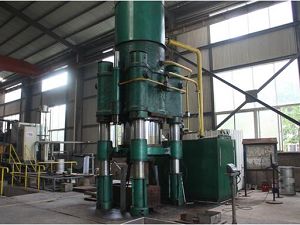
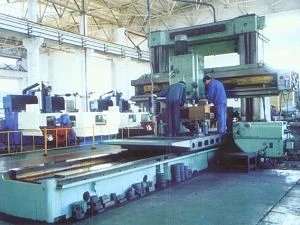
We are a manufacturer of producing high strength Titanium product, with completely equipment, skillful technique, production line, experienced R & D and sales team.
Quick Response
Our commitment is to respond to your inquiries within 24 hours, ensuring that you receive the information and support you require in a timely manner.
-
![TA2 Titanium Heat Exchanger]() TA2 Titanium Heat ExchangerTA2 Titanium heat exchangers can fully utilize their non-magnetic characteristics due to the low loss of metal ions, and are used as heat exchangers for pharmaceutical and food applications. Due to
TA2 Titanium Heat ExchangerTA2 Titanium heat exchangers can fully utilize their non-magnetic characteristics due to the low loss of metal ions, and are used as heat exchangers for pharmaceutical and food applications. Due to -
![Titanium Machining Parts]() Titanium Machining PartsOur company has excellent titanium raw material resources and is also a source manufacturer with our own production equipment and skilled workers, with low production and processing costs.
Titanium Machining PartsOur company has excellent titanium raw material resources and is also a source manufacturer with our own production equipment and skilled workers, with low production and processing costs.


High Melting Point
Titanium has a higher melting point than many other metals, including iron, aluminum, tin and copper. It takes temperatures in excess of 3,304 degrees Fahrenheit to melt titanium.
High Strength and Low Density
Titanium has the highest strength-to-density ratio of all metals on the periodic table; its strength-to-density ratio is even higher than that of steel's.
Corrosion Resistance
Another key advantage of titanium in the manufacturing industry is corrosion resistance. Many metals and alloys rust when exposed to oxygen. Oxygen in the air or water causes them to oxidize. As oxidation occurs, a layer of rust will begin to form.
Lightweight
Titanium weighs less than most other metals and alloys. When compared to steel, titanium weighs about half as much. This is another reason why aerospace manufacturing companies use it.
Recyclable
Titanium can be melted down and reused in future applications. Furthermore, since it doesn't suffer from corrosion, titanium doesn't deteriorate.
Alpha Alloys
Alpha alloys are titanium alloys that are only purposely alloyed with oxygen. While other components such as carbon and iron can be found in small quantities, they only exist as impurities. As an interstitial alloying element, oxygen significantly boosts strength while decreasing ductility. The chemical and engineering industries are the primary users of alpha alloys.
Near-Alpha Alloys
Near-alpha alloys of titanium are the most common high-temperature alloys. However, their maximum working temperature is now limited to 500 to 550 ºC.
Beta and Near-Beta Alloys
They are more easily cold workable than alpha-beta alloys, heat treatable to high strengths, and some have better corrosion resistance than commercially pure grades.
Alpha and Beta Alloys
These are typically medium to high strength materials with tensile strengths ranging from 620 to 1250 MPa and creep resistance ranging from 350 to 400°C.

Applications of Titanium Equipments
Titanium in the Aerospace Market
The aerodynamic friction that resulted from the intense speeds of which the aircraft was capable created so much aerodynamic friction that if any other metal was used, it would simply melt out of the sky.
Titanium in Medical Devices
In fact, it is estimated that we ingest around 0.8mg of Titanium a day – most passes through us without being absorbed. Also, its density is very similar to human bone, which will readily adhere to it.
Titanium in Everyday Products
The remaining 95% is used to manufacture pure Titanium Dioxides – a pigment that enhances brightness and opacity in paints and inks, paper, and plastics, and even in food products and cosmetics.
Titanium Art/Architecture
Titanium spontaneously forms a hard protective oxide film upon contact with any oxygen. It's this film that gives the metal its trademark shine and shimmer, with variations in the film's thickness affecting the color that the metal projects.
Titanium in Sporting Products
The high strength to weight ratio of Titanium makes it ideal for use in a wide range of sporting equipment.
Our Factory



Frequently Asked Questions
As one of the most professional titanium equipments manufacturers and suppliers in China, we're featured by quality products and good price. Please rest assured to buy high-grade titanium equipments from our factory. Contact us for pricelist.
tungsten wear resistance, , tungsten retailerPopular Products


