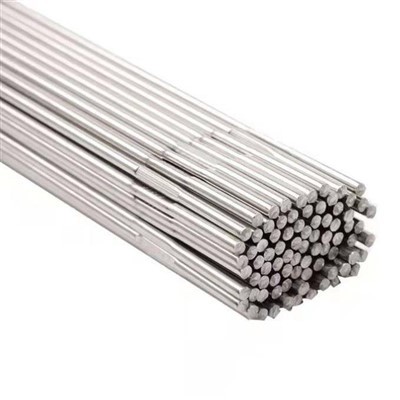
Hey there! I'm a supplier of Titanium Alloy Pipe, and I know how crucial it is to ensure the quality of these pipes. Internal defects can significantly impact the performance and safety of titanium alloy pipes, so detecting them accurately is a must. In this blog, I'll share some effective ways to detect internal defects in titanium alloy pipes.
Why Detect Internal Defects in Titanium Alloy Pipes?
Titanium alloy pipes are widely used in various industries, such as aerospace, automotive, and chemical processing, due to their excellent corrosion resistance, high strength, and lightweight properties. However, internal defects like cracks, porosity, and inclusions can weaken the pipes and lead to failures. For example, in aerospace applications, a defective titanium alloy pipe could cause a catastrophic failure of an aircraft's hydraulic system. So, detecting these defects early can prevent potential disasters and save a lot of money and resources.
Non - Destructive Testing (NDT) Methods
Ultrasonic Testing (UT)
Ultrasonic testing is one of the most commonly used methods to detect internal defects in titanium alloy pipes. It works by sending high - frequency sound waves into the pipe. When these waves encounter a defect, they are reflected back, and the reflected waves are detected by a sensor. The time it takes for the waves to return and their amplitude can provide information about the size, location, and type of the defect.
The advantage of ultrasonic testing is its high sensitivity. It can detect very small defects, even those hidden deep inside the pipe. Also, it's a relatively fast method, which means you can test a large number of pipes in a short time. But it does require a skilled operator to interpret the results accurately. You can learn more about the application of ultrasonic testing in Titanium Alloy Tubing.
Radiographic Testing (RT)
Radiographic testing uses X - rays or gamma rays to create an image of the internal structure of the titanium alloy pipe. The rays pass through the pipe and are captured on a film or a digital detector. Defects appear as darker or lighter areas on the image, depending on their density compared to the surrounding material.
This method provides a clear and detailed image of the internal defects, making it easy to identify their shape and location. It's particularly useful for detecting defects like porosity and inclusions. However, radiographic testing has some drawbacks. It involves the use of radiation, which requires strict safety precautions. Also, it's more time - consuming and expensive than ultrasonic testing.
Eddy Current Testing (ECT)
Eddy current testing is based on the principle of electromagnetic induction. When an alternating current is passed through a coil near the surface of the titanium alloy pipe, it generates eddy currents in the pipe. If there is a defect in the pipe, it will disrupt the flow of these eddy currents, and the change can be detected by measuring the impedance of the coil.
Eddy current testing is very effective for detecting surface and near - surface defects in titanium alloy pipes. It's a fast and non - contact method, which means it won't damage the pipe during testing. But it has limitations in detecting deeper internal defects.
Destructive Testing Methods
Metallographic Analysis
Metallographic analysis involves cutting a sample from the titanium alloy pipe and preparing it for microscopic examination. The sample is polished and etched to reveal the microstructure of the material. Defects like cracks, inclusions, and abnormal grain structures can be clearly seen under a microscope.


This method provides detailed information about the internal structure of the pipe and can help identify the root cause of the defects. However, it's a destructive method, which means the pipe sample is destroyed during the testing process. So, it's usually used for quality control and research purposes rather than for large - scale production testing.
Pressure Testing
Pressure testing is another way to detect internal defects in titanium alloy pipes. The pipe is filled with a liquid or gas and subjected to a specific pressure. If there is a defect in the pipe, the pressure will cause the fluid to leak out, which can be detected by monitoring the pressure or looking for visible signs of leakage.
Pressure testing is a simple and straightforward method, but it has some limitations. It can only detect defects that cause leakage, and it may not be able to accurately locate the defect. Also, it requires special equipment and safety precautions to handle the pressure.
Tips for Effective Defect Detection
Choose the Right Testing Method
The choice of testing method depends on several factors, such as the type of defect you're looking for, the size and location of the pipe, and your budget. For example, if you suspect small internal cracks, ultrasonic testing might be the best choice. If you want to get a detailed image of the internal structure, radiographic testing could be more suitable.
Train Your Operators
No matter which testing method you choose, having skilled operators is essential. They need to understand the principles of the testing method, know how to operate the equipment correctly, and be able to interpret the results accurately. Provide regular training and certification programs for your operators to ensure the quality of the testing.
Establish a Quality Control System
A comprehensive quality control system is crucial for ensuring the reliability of the defect detection process. This includes setting up inspection procedures, maintaining testing equipment, and keeping records of the test results. By following a strict quality control system, you can identify and address any issues early and improve the overall quality of your titanium alloy pipes.
Conclusion
Detecting internal defects in titanium alloy pipes is a complex but essential task. By using a combination of non - destructive and destructive testing methods, following the right tips, and establishing a quality control system, you can ensure the quality and reliability of your pipes. As a Titanium Alloy Pipe supplier, I'm committed to providing high - quality products to my customers. If you're interested in purchasing our titanium alloy pipes or have any questions about defect detection, feel free to contact me for a procurement discussion. I'm always here to help you find the best solutions for your needs.
References
- ASNT (American Society for Nondestructive Testing). Recommended Practice No. SNT - TC - 1A.
- ASTM International. Standard Test Methods for Nondestructive Testing of Metals.
- ISO (International Organization for Standardization). Standards related to metal testing and quality control.