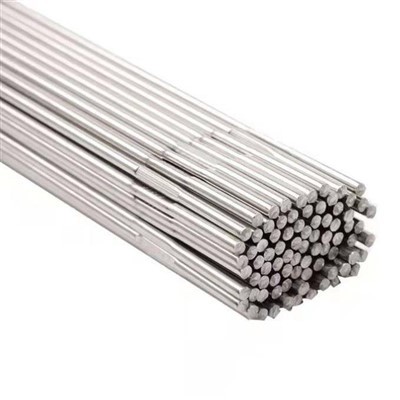
As a supplier of Titanium Hex Bars, I often encounter various technical inquiries from clients. One question that comes up quite frequently is about the Poisson's ratio of a Titanium Hex Bar. In this blog post, I'll delve into what the Poisson's ratio is, its significance for Titanium Hex Bars, and how it relates to the overall performance of these products.
Understanding Poisson's Ratio
Poisson's ratio is a fundamental material property that describes the relationship between the lateral strain and the axial strain of a material when it is subjected to an axial load. When a material is stretched or compressed in one direction (the axial direction), it will typically contract or expand in the perpendicular directions (the lateral directions). Poisson's ratio, denoted by the Greek letter ν (nu), is defined as the negative ratio of the lateral strain (ε_lateral) to the axial strain (ε_axial):
ν = - ε_lateral / ε_axial
The value of Poisson's ratio ranges from -1 to 0.5 for most engineering materials. A positive Poisson's ratio indicates that when a material is stretched axially, it contracts laterally, which is the most common behavior. A value of 0.5 represents a perfectly incompressible material, while a negative Poisson's ratio implies that the material expands laterally when stretched axially, which is a characteristic of some special materials known as auxetic materials.
Poisson's Ratio of Titanium
Titanium is a widely used metal in various industries due to its excellent combination of high strength, low density, and good corrosion resistance. The Poisson's ratio of titanium typically falls within the range of 0.32 to 0.34. This value indicates that when a titanium bar, such as a Titanium Hex Bar, is subjected to an axial load, it will contract laterally by about one-third of the amount it elongates axially.
The specific Poisson's ratio of a Titanium Hex Bar can vary slightly depending on several factors, including the alloy composition, the manufacturing process, and the heat treatment. Different titanium alloys have different microstructures and mechanical properties, which can affect the Poisson's ratio. For example, titanium alloys with higher levels of alloying elements may have slightly different Poisson's ratios compared to pure titanium.
Significance of Poisson's Ratio for Titanium Hex Bars
The Poisson's ratio of a Titanium Hex Bar is an important parameter that can have a significant impact on its performance in various applications. Here are some key aspects where the Poisson's ratio plays a crucial role:
Structural Design
In structural design, engineers need to consider the Poisson's ratio when analyzing the deformation and stress distribution of Titanium Hex Bars under load. The lateral contraction or expansion of the bar due to the Poisson's effect can affect the overall stability and integrity of the structure. For example, in a truss structure made of Titanium Hex Bars, the Poisson's ratio influences the interaction between the bars and the joints, and it needs to be taken into account to ensure the proper functioning of the structure.
Machining and Fabrication
During machining and fabrication processes, the Poisson's ratio of Titanium Hex Bars can affect the dimensional accuracy and surface finish. When a bar is machined, the lateral contraction or expansion can cause changes in the dimensions of the machined part, which may require additional compensation or adjustment. Understanding the Poisson's ratio helps machinists and fabricators to optimize the machining parameters and minimize the dimensional errors.
Fatigue and Fracture Resistance
The Poisson's ratio also has an impact on the fatigue and fracture resistance of Titanium Hex Bars. The lateral deformation caused by the Poisson's effect can introduce additional stress concentrations at the surface and within the material, which may accelerate the initiation and propagation of cracks. By considering the Poisson's ratio in the design and manufacturing processes, engineers can improve the fatigue and fracture resistance of the bars and enhance their reliability in long-term service.
Applications of Titanium Hex Bars
Titanium Hex Bars are used in a wide range of applications across various industries, including aerospace, automotive, medical, and marine. Here are some specific examples:
Aerospace Industry
In the aerospace industry, Titanium Hex Bars are used to manufacture critical components such as aircraft frames, engine parts, and landing gear. The high strength-to-weight ratio and excellent corrosion resistance of titanium make it an ideal material for these applications. The Poisson's ratio of the Titanium Hex Bars is carefully considered in the design and analysis of these components to ensure their structural integrity and performance under extreme conditions.
Medical Industry
Titanium is biocompatible, which means it is well-tolerated by the human body. Titanium Hex Bars are used in the medical industry to manufacture implants such as bone plates, screws, and dental implants. The Poisson's ratio of the bars is important in ensuring that the implants fit properly and function effectively within the body.
Marine Industry
In the marine industry, Titanium Hex Bars are used in applications where corrosion resistance is crucial, such as shipbuilding, offshore platforms, and desalination plants. The Poisson's ratio of the bars affects their performance in seawater environments, where they are subjected to both mechanical loads and corrosive attack.
Our Titanium Hex Bars
As a supplier of Titanium Hex Bars, we offer a wide range of products with different specifications and alloy compositions to meet the diverse needs of our customers. Our Titanium Hex Bars are manufactured using high-quality raw materials and advanced production processes to ensure excellent mechanical properties and dimensional accuracy. We also provide customized solutions to meet specific customer requirements.

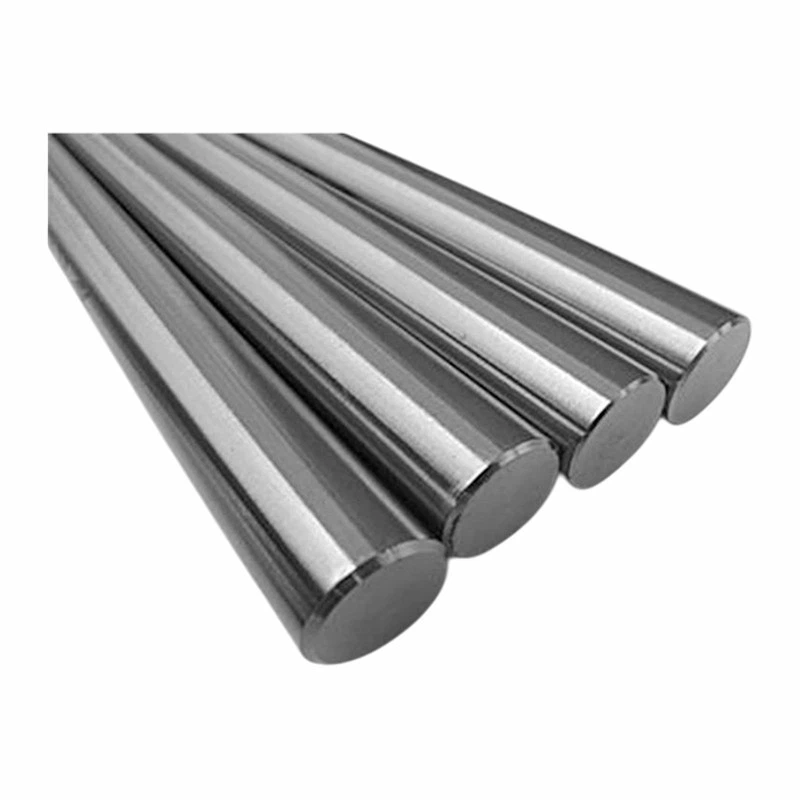
In addition to Titanium Hex Bars, we also supply other titanium products, such as Titanium Square Bar, Titanium Rolling Bar, and Pure Titanium Rod. These products are available in various sizes and shapes, and they are suitable for a wide range of applications.
Contact Us for Procurement
If you are interested in our Titanium Hex Bars or other titanium products, please feel free to contact us for procurement. We have a professional sales team that can provide you with detailed product information, technical support, and competitive pricing. We are committed to providing our customers with high-quality products and excellent service, and we look forward to working with you.
References
- Callister, W. D., & Rethwisch, D. G. (2011). Materials Science and Engineering: An Introduction. Wiley.
- ASM Handbook Committee. (1994). ASM Handbook Volume 2: Properties and Selection: Nonferrous Alloys and Special-Purpose Materials. ASM International.
- Ti-6Al-4V Alloy Data Sheet. (n.d.). Available from various titanium alloy suppliers.