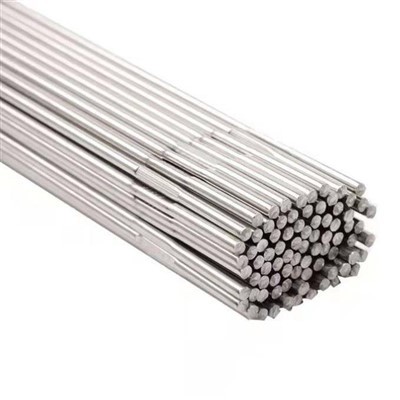
Hey there! As a supplier of pure titanium rods, I often get asked, "What's the price range of pure titanium rods?" Well, it's not a one-size-fits-all answer, and in this blog, I'll break down the factors affecting the prices and give you a rough idea of what to expect.
Let's start with the basics. Pure titanium rods are highly sought-after for their excellent corrosion resistance, high strength-to-weight ratio, and biocompatibility. These properties make them ideal for a wide range of applications, from aerospace and automotive industries to medical and dental fields.
The price of pure titanium rods can vary significantly based on several key factors. First off, the quality of the titanium plays a huge role. Higher purity levels typically command a higher price. For instance, commercially pure titanium (CP titanium) with a purity of 99% or above is more expensive than those with slightly lower purity. This is because the refining process to achieve such high purity is more complex and costly.
Another factor is the size and dimensions of the rods. Thicker and longer rods generally cost more. Larger rods require more raw material and more energy to produce. Plus, machining larger rods to the desired specifications can also be more challenging and time-consuming, which adds to the overall cost.
The production process also impacts the price. For example, rods that are manufactured using advanced techniques like powder metallurgy or precision forging might be pricier than those made through more conventional methods. These advanced processes can result in better mechanical properties and a more consistent quality, but they come at a higher cost.
Now, let's talk about the actual price range. On the lower end, you might find pure titanium rods starting at around $20 to $30 per kilogram. These are usually smaller in diameter and length, and they might have a slightly lower purity level. However, they can still be suitable for less demanding applications where cost is a major concern.
For medium-grade pure titanium rods with a decent purity level and a more common size, the price can range from $30 to $50 per kilogram. These rods are widely used in various industries and offer a good balance between quality and cost.
On the high end, if you're looking for high-purity, large-diameter, and precisely machined rods, you could be looking at prices upwards of $50 per kilogram. These premium rods are often used in critical applications such as aerospace components and medical implants, where the highest quality standards are non - negotiable.
It's also worth noting that the market price of pure titanium rods can fluctuate over time due to factors like supply and demand, raw material availability, and global economic conditions. For example, if there's a sudden increase in demand from the aerospace industry, the prices of titanium rods are likely to go up.
When you're considering buying pure titanium rods, you might also come across different shapes and alloys. For example, Titanium Square Bar is another popular option. Square bars have their own unique set of applications, especially in construction and machinery where a flat surface is required. The price of titanium square bars can be similar to that of round rods, but it can also vary depending on the specific manufacturing process and dimensions.
Titanium Alloy Rod is yet another alternative. Alloys are created by combining titanium with other elements like aluminum, vanadium, or molybdenum to enhance certain properties. Titanium alloy rods can be more expensive than pure titanium rods, especially if they contain rare or costly alloying elements. However, they also offer improved strength, heat resistance, or other performance characteristics that might be necessary for specific applications.


If you're more interested in the classic round shape, Titanium Round Rod is the most common type. Round rods are easy to machine and are used in a wide variety of applications, from simple structural components to complex mechanical parts.
So, how do you decide which one to choose and what price to pay? It all depends on your specific requirements. If you're working on a budget and your application doesn't require the highest level of purity or performance, a lower-priced titanium rod might be sufficient. On the other hand, if you're dealing with a high - stakes project where performance and quality are crucial, you might want to invest in a higher - end option.
As a supplier, I'm here to help you find the right pure titanium rod for your needs. Whether you need a small quantity for a prototype or a large order for a long - term production run, I can offer you competitive prices and excellent service. If you have any questions about the price range, the different types of titanium rods, or the best option for your project, don't hesitate to get in touch. We can discuss your specific needs in detail and find the perfect solution for you.
In conclusion, the price range of pure titanium rods can vary widely depending on factors like quality, size, production process, and market conditions. By understanding these factors, you can make an informed decision when purchasing titanium rods. So, if you're in the market for pure titanium rods, reach out to me, and let's start a conversation about how I can help you with your procurement needs.
References
- "Titanium: Properties, Processing, and Applications", ASM International
- "Handbook of Titanium Alloys", Wiley