


Hey there! As a supplier of titanium blocks, I often get asked a really interesting question: "Can a titanium block be forged?" Well, let's dive right into this topic and find out.

First off, let's talk a bit about titanium. Titanium is an amazing metal. It's super strong, yet lightweight. It has excellent corrosion resistance, which makes it perfect for a whole bunch of applications, from aerospace to medical devices. But when it comes to forging, things get a bit more complicated.
Forging is a process where you use compressive forces to shape a metal. You heat the metal up to a specific temperature and then use hammers or presses to mold it into the desired shape. Now, titanium can definitely be forged, but it's not as straightforward as forging some other metals like steel.
One of the main challenges with forging titanium is its high melting point. Titanium melts at around 1,668 degrees Celsius (3,034 degrees Fahrenheit). That's pretty hot! You need some serious heating equipment to get it to the right temperature for forging. And once it's heated, you have to work quickly because titanium cools down fast. If it cools too much during the forging process, it can become brittle and crack.
Another issue is that titanium reacts with oxygen and nitrogen in the air when it's heated. This can form a hard, brittle layer on the surface of the metal, which is called an alpha case. To prevent this, forging titanium usually has to be done in a controlled environment, like a vacuum or an inert gas atmosphere.
But despite these challenges, there are some really good reasons to forge titanium blocks. Forged titanium parts have better mechanical properties than those made from cast titanium. The forging process aligns the grain structure of the metal, which makes it stronger and more durable. This is especially important in applications where the parts are under a lot of stress, like in aircraft engines or high-performance sports equipment.
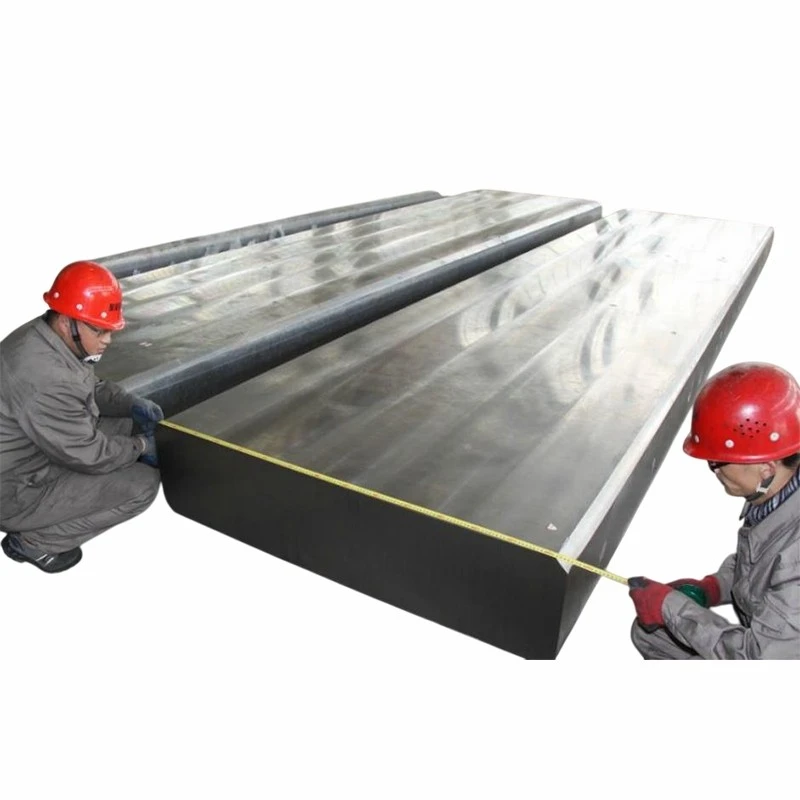
Now, let's take a look at the different types of titanium blocks we offer. We have Titanium Forged Block, which are made through the forging process. These blocks have been carefully crafted to have the best possible properties for your specific needs. Whether you're looking for high strength, good ductility, or excellent corrosion resistance, our forged titanium blocks can deliver.
We also have Titanium Metal Block, which are in their raw, unforged state. These blocks are great if you want to do your own forging or if you're using a different manufacturing process. They come in a variety of sizes and grades, so you can choose the one that's right for your project.
So, how do you go about forging a titanium block? Well, it starts with choosing the right grade of titanium. There are different grades of titanium, each with its own unique properties. For example, Grade 2 titanium is known for its good corrosion resistance and is often used in marine applications. Grade 5 titanium, also known as Ti-6Al-4V, is one of the most commonly used grades in aerospace because of its high strength-to-weight ratio.
Once you've chosen the right grade, you need to heat the titanium block to the appropriate forging temperature. This can vary depending on the grade and the specific forging process you're using. As I mentioned earlier, you have to be careful to control the atmosphere to prevent the formation of the alpha case.
After the block is heated, it's time to start forging. You can use a variety of forging techniques, such as open-die forging, closed-die forging, or upset forging. Each technique has its own advantages and is suitable for different types of parts.
Open-die forging is a more flexible process where the metal is shaped between two flat or simple dies. This is great for making large, simple shapes or for pre-forming a part before further machining. Closed-die forging, on the other hand, uses a set of dies that are shaped like the final part. This allows for more precise shaping and is often used for making complex parts with tight tolerances. Upset forging is used to increase the cross-sectional area of a part by compressing it axially.
Once the forging is done, the part usually needs to be heat-treated to relieve any internal stresses and to improve its mechanical properties. This can involve annealing, quenching, or tempering, depending on the grade of titanium and the desired properties of the final part.
So, as you can see, forging a titanium block is definitely possible, but it requires some specialized knowledge and equipment. That's where we come in. As a titanium block supplier, we have the expertise and the resources to help you with your titanium forging needs.
Whether you're a small manufacturer looking for a few titanium blocks or a large corporation in need of a continuous supply, we can provide you with high-quality titanium blocks at competitive prices. We work closely with our customers to understand their requirements and to ensure that we deliver the right product at the right time.
If you're interested in learning more about our titanium blocks or if you have any questions about forging titanium, don't hesitate to get in touch. We're always happy to have a chat and to help you find the best solution for your project. Whether you're just starting out or you're an experienced forger, we're here to support you every step of the way.
In conclusion, titanium blocks can be forged, and the resulting parts have some amazing properties. With the right grade of titanium, the proper forging techniques, and a bit of know-how, you can create high-quality, durable parts for a wide range of applications. So, if you're in the market for titanium blocks, give us a shout. We're ready to help you take your project to the next level.
References
- "Titanium: A Technical Guide" by John C. Williams
- "Forging of Metals" by George E. Dieter
- Various industry research papers on titanium forging processes


