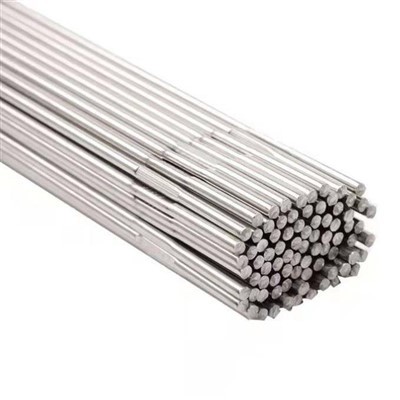
Hey there! As a titanium ingot supplier, I often get asked about all sorts of technical details regarding titanium ingots. One question that pops up quite a bit is, "What is the coefficient of thermal expansion of a titanium ingot?" Let's dive right into it.


First off, let's understand what the coefficient of thermal expansion actually means. In simple terms, it's a measure of how much a material expands or contracts when its temperature changes. Every material has its own unique coefficient of thermal expansion, and for titanium ingots, it's an important property that can have a big impact on various applications.
Titanium is a pretty amazing metal. It's known for its high strength, low density, and excellent corrosion resistance. But when it comes to thermal expansion, it behaves in a specific way. The coefficient of thermal expansion of pure titanium is relatively low compared to some other metals. For pure titanium, the linear coefficient of thermal expansion (CTE) is approximately 8.6 x 10⁻⁶ /°C at room temperature (around 20°C). This means that for every degree Celsius increase in temperature, a pure titanium ingot will expand by about 8.6 millionths of its original length.
Now, things get a bit more interesting when we talk about titanium alloy ingots. Titanium alloys are created by adding other elements to pure titanium to enhance certain properties. Different alloys have different coefficients of thermal expansion depending on the specific elements added and their proportions. For example, some titanium - aluminum - vanadium alloys, which are commonly used in aerospace applications, may have a CTE that's slightly different from pure titanium.
The low coefficient of thermal expansion of titanium ingots is a huge advantage in many industries. In aerospace, where components are exposed to extreme temperature variations during flight, a low CTE helps ensure that parts maintain their shape and dimensions. This is crucial for the safety and performance of aircraft. For instance, turbine blades made from titanium alloys need to have stable dimensions even when the temperature inside the engine reaches extremely high levels.
In the medical field, titanium's low CTE is also beneficial. Titanium implants, such as hip and knee replacements, need to match the thermal behavior of the surrounding human tissue as closely as possible. Since the human body maintains a relatively constant temperature, a low CTE in titanium implants helps prevent issues like loosening or stress on the surrounding bone due to thermal expansion or contraction.
Another area where the coefficient of thermal expansion matters is in precision engineering. When manufacturing high - precision parts, even a small change in dimensions due to temperature can cause significant problems. Titanium ingots with their predictable and relatively low CTE are ideal for making components like precision instruments and molds.
If you're in the market for titanium ingots, whether it's Pure Titanium Ingot or Titanium Alloy Ingot, understanding the coefficient of thermal expansion is just one piece of the puzzle. But it's an important one that can help you choose the right material for your specific application.
We, as a titanium ingot supplier, have a wide range of titanium ingots available. Our team of experts can help you select the most suitable ingot based on your requirements, including the desired coefficient of thermal expansion. Whether you're working on a small - scale project or a large - scale industrial application, we've got you covered.
If you're interested in learning more or want to start a procurement discussion, don't hesitate to reach out. We're here to answer all your questions and provide you with the best titanium ingot solutions for your needs.
References
- ASM Handbook Volume 2: Properties and Selection: Nonferrous Alloys and Special - Purpose Materials.
- Titanium: A Technical Guide, Second Edition by John C. Williams.