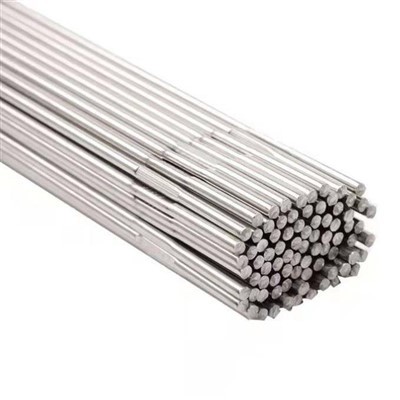
Pure titanium rods are well - known in various industries for their remarkable properties. As a dedicated supplier of Pure Titanium Rods, I am often asked about the strength of these rods. So, let's dive deep into understanding just how strong a pure titanium rod really is.
The Basics of Pure Titanium
Titanium is a chemical element with the symbol Ti and atomic number 22. Pure titanium has a lustrous silver - white color and is renowned for its high strength - to - weight ratio. This is a crucial characteristic as it allows for the creation of strong structures without adding excessive weight.
When it comes to the crystal structure, pure titanium exists in two allotropic forms. At room temperature, it has a hexagonal close - packed (hcp) structure known as alpha - titanium. As the temperature rises above 882°C, it transforms into a body - centered cubic (bcc) structure called beta - titanium. This phase transition can have a significant impact on the mechanical properties, including strength, of the titanium rod.
Tensile Strength
Tensile strength is one of the most important indicators of a material's strength. It measures the maximum amount of tensile (pulling) stress that a material can withstand before breaking. Pure titanium rods have an impressive tensile strength. Commercially pure titanium (CP titanium) grades 1 - 4 have tensile strengths that range from about 240 MPa (megapascals) for grade 1 to around 480 MPa for grade 4.


To put this into perspective, let's compare it with some other common metals. Aluminum has a relatively low tensile strength, typically in the range of 70 - 270 MPa depending on the alloy. Mild steel, on the other hand, usually has a tensile strength of around 400 - 550 MPa. So, while pure titanium may not always have the highest tensile strength among metals, its combination of high strength and low density gives it a distinct advantage in many applications.
The high tensile strength of pure titanium rods makes them suitable for applications where the material needs to withstand significant pulling forces. For example, in the aerospace industry, titanium rods can be used in the construction of aircraft frames and components. The ability to resist tensile forces is crucial for ensuring the safety and durability of these structures during flight.
Yield Strength
Yield strength is another important measure of a material's strength. It represents the stress at which a material begins to deform plastically, meaning it will not return to its original shape after the stress is removed. Pure titanium rods also exhibit good yield strength values.
For commercially pure titanium grades, the yield strength follows a similar trend as the tensile strength with grade 1 having a lower yield strength and grade 4 having a higher one. Grade 1 CP titanium has a yield strength of approximately 170 MPa, while grade 4 can have a yield strength of up to around 410 MPa. This property is vital in applications where the material needs to maintain its shape under load without undergoing permanent deformation.
In the medical field, for instance, pure titanium rods are used in orthopedic implants. The high yield strength ensures that the implants can tolerate the forces exerted on them by the body's movements without deforming over time, which is essential for the long - term success of the implant.
Fatigue Strength
Fatigue strength is the ability of a material to withstand repeated loading and unloading cycles without failing. This is a critical property for materials used in applications where they are subjected to cyclic stresses. Pure titanium rods have excellent fatigue strength, especially when compared to some other metals.
The fatigue strength of titanium is influenced by several factors, including its surface finish, microstructure, and the type of loading. A smooth surface finish can significantly improve the fatigue strength as it reduces the stress concentrations that can act as initiation points for cracks.
Titanium's high fatigue strength makes it a top choice for applications such as bicycle frames. Bicycles are constantly subjected to cyclic stresses as they are ridden, and a material with good fatigue strength ensures that the frame can last for a long time without failing. For more information on different titanium products, you can refer to our Titanium Hex Bar page.
Corrosion Resistance and Its Impact on Strength
One of the most remarkable properties of pure titanium is its excellent corrosion resistance. Titanium forms a thin, adherent, and protective oxide layer on its surface when exposed to oxygen. This oxide layer prevents further corrosion of the metal, even in harsh environments such as seawater or in the presence of certain chemicals.
Corrosion can significantly reduce the strength of a material over time by causing pitting, cracking, and general degradation of the structure. Since pure titanium rods are highly resistant to corrosion, their strength is maintained over long periods. This is especially important in marine applications, where metals are constantly exposed to saltwater. For example, titanium rods can be used in shipbuilding and offshore structures, where their corrosion resistance ensures that they retain their strength and integrity for many years.
If you are interested in using titanium for welding applications, our Titanium Filler Rod Welding page provides detailed information on the relevant products.
Applications Based on Strength
The strength properties of pure titanium rods make them suitable for a wide range of applications. In addition to the aerospace, medical, and marine industries mentioned above, the automotive industry also benefits from the use of titanium rods. Titanium rods can be used in engine components, where their high strength - to - weight ratio helps to improve fuel efficiency and performance.
In the sports equipment industry, pure titanium rods are used to manufacture high - end products such as tennis rackets and golf clubs. The strength of the titanium allows for the creation of lightweight yet durable equipment that can enhance the player's performance.
Impact on the Manufacturing Process
The strength of pure titanium rods also has an impact on the manufacturing process. Due to its high strength, machining titanium can be more challenging compared to some other metals. Specialized tools and techniques are often required to cut, drill, and shape titanium rods. However, advancements in manufacturing technology have made it more feasible to work with titanium, and the benefits of using titanium in terms of strength and other properties often outweigh the challenges.
Conclusion
In conclusion, pure titanium rods are incredibly strong materials with high tensile, yield, and fatigue strengths. Their excellent corrosion resistance further enhances their durability and long - term strength. As a Pure Titanium Rod supplier, I am well - aware of the diverse applications and the unique advantages that pure titanium rods offer.
Whether you are in the aerospace, medical, automotive, or sports equipment industry, pure titanium rods can provide the strength and performance you need. If you are interested in purchasing pure titanium rods for your specific application, we welcome you to reach out and initiate a procurement discussion. We are ready to provide you with high - quality products and professional expertise.
References
- ASM Handbook, Volume 2: Properties and Selection: Nonferrous Alloys and Special - Purpose Materials
- Titanium: A Technical Guide by Don Eylon
- “Handbook of Titanium Science and Technology” edited by R. I. Jaffee and H. M. Burte