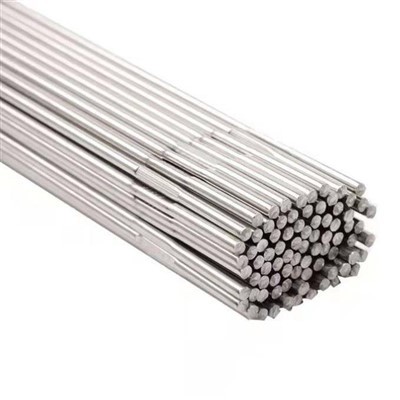
Hey there! As a titanium rod supplier, I often get asked this question: "Can a titanium rod be welded?" Well, let's dive right into it and explore the ins and outs of welding titanium rods.
First off, the short answer is yes, titanium rods can be welded. But it's not as straightforward as welding some other metals. Titanium is a unique metal with some specific properties that make the welding process a bit more challenging.
Properties of Titanium That Affect Welding
Titanium is known for its high strength - to - weight ratio, excellent corrosion resistance, and biocompatibility. These are some of the reasons why it's so popular in various industries, from aerospace to medical. However, these same properties also play a role in the welding process.
One of the main challenges with welding titanium is its reactivity. Titanium has a strong affinity for oxygen, nitrogen, and hydrogen at elevated temperatures. When titanium is heated during welding, it can easily absorb these elements from the air, which can lead to the formation of brittle compounds. These brittle areas can significantly reduce the strength and ductility of the welded joint, making it more prone to cracking.
Another factor is the high melting point of titanium. Titanium melts at around 1668°C (3034°F), which means you need a welding process that can generate enough heat to melt the metal. And once it's melted, you have to keep it protected from the atmosphere until it cools down.
Welding Processes for Titanium Rods
There are several welding processes that can be used to weld titanium rods, but the most common ones are Gas Tungsten Arc Welding (GTAW) and Plasma Arc Welding (PAW).
Gas Tungsten Arc Welding (GTAW)
GTAW, also known as TIG (Tungsten Inert Gas) welding, is a popular choice for welding titanium. In this process, a non - consumable tungsten electrode is used to create an arc that melts the titanium rod. An inert gas, usually argon, is used to shield the weld area from the atmosphere. This helps prevent the titanium from reacting with oxygen, nitrogen, and hydrogen.
The advantage of GTAW is that it allows for precise control of the heat input and the weld pool. This is important when welding titanium because you want to minimize the time the metal is at high temperatures to reduce the risk of contamination. However, GTAW is a relatively slow process, and it requires a high level of skill from the welder.
Plasma Arc Welding (PAW)
PAW is another option for welding titanium rods. It's similar to GTAW, but it uses a constricted arc that is more focused and has higher energy density. This allows for faster welding speeds compared to GTAW.
In PAW, a plasma gas is used to create the arc, and a shielding gas is used to protect the weld area. The constricted arc in PAW can penetrate deeper into the titanium, which can be beneficial for thicker rods. However, like GTAW, it also requires careful control to prevent contamination.
Pre - Welding and Post - Welding Considerations
Pre - Welding
Before welding a titanium rod, it's crucial to clean the surface thoroughly. Any dirt, oil, or oxide layer on the surface can introduce contaminants during the welding process. A common method for cleaning titanium is to use a chemical cleaner followed by a rinse with clean water.
It's also important to fit the parts properly. The joint design should be carefully planned to ensure good fusion and minimize the risk of defects. For example, a butt joint with a proper root gap can help ensure that the weld penetrates fully through the thickness of the rod.
Post - Welding
After welding, the titanium rod may need some post - welding treatment. This can include stress relieving to reduce the internal stresses that are generated during the welding process. Stress relieving can improve the long - term performance of the welded joint.
Inspection is also an important step. Non - destructive testing methods such as ultrasonic testing or X - ray testing can be used to check for any internal defects in the weld. Visual inspection can also be done to check for surface defects like cracks or porosity.
Applications of Welded Titanium Rods
Welded titanium rods have a wide range of applications. In the aerospace industry, they are used in the construction of aircraft frames, engine components, and landing gear. The high strength and corrosion resistance of titanium make it an ideal material for these critical applications.
In the medical field, welded titanium rods are used in orthopedic implants. The biocompatibility of titanium means that it can be safely used inside the human body without causing an immune reaction. Welding allows for the fabrication of complex shapes that are tailored to the specific needs of the patient.


If you're looking for high - quality titanium rods for your welding projects, we offer a variety of options. Check out our Titanium Alloy Rod, Titanium Square Bar, and Titanium Hex Bar.
Conclusion
So, in conclusion, yes, a titanium rod can be welded, but it requires a proper understanding of the metal's properties and the right welding techniques. With the right approach, you can achieve strong and reliable welded joints that meet the requirements of various applications.
If you're interested in purchasing titanium rods for your welding needs or have any questions about welding titanium, don't hesitate to reach out. We're here to help you find the best solutions for your projects.
References
-ASM Handbook, Volume 6: Welding, Brazing, and Soldering
-Welding Metallurgy of Titanium Alloys by John C. Lippold and David J. Kotecki
-Titanium: A Technical Guide by John R. Davis