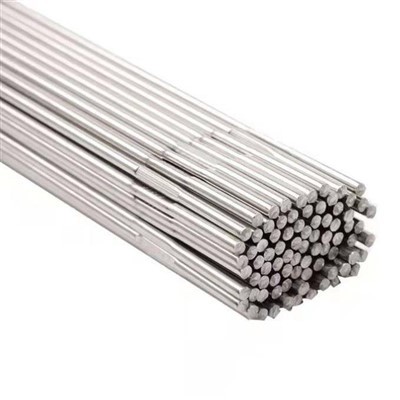
As a trusted supplier of Titanium Round Rods, I'm often asked about the extrusion process that goes into creating these high - quality products. In this blog post, I'll delve deep into the extrusion process for titanium round rods, explaining the steps, the importance, and how it contributes to the overall quality of the final product.
Understanding Titanium and Its Properties
Titanium is a remarkable metal known for its exceptional strength - to - weight ratio, corrosion resistance, and biocompatibility. These properties make titanium round rods highly sought after in various industries, including aerospace, medical, and automotive. Before we jump into the extrusion process, it's crucial to understand the characteristics of titanium that influence how it's processed.
Titanium has a relatively high melting point, around 1668°C (3034°F), which requires specialized equipment and techniques to work with. It also has a strong affinity for oxygen, nitrogen, and carbon at high temperatures, which can lead to the formation of brittle compounds. Therefore, maintaining a controlled environment during processing is essential.
The Extrusion Process: An Overview
Extrusion is a manufacturing process where a material is forced through a die of a specific cross - sectional shape. In the case of titanium round rods, the goal is to create a rod with a circular cross - section of a consistent diameter and high - quality surface finish. The extrusion process can be divided into several key steps:
Step 1: Preparation of the Titanium Billet
The process begins with the selection of a high - quality titanium billet. The billet is a cylindrical piece of titanium that serves as the raw material for the extrusion. The billet's size and composition are carefully chosen based on the desired dimensions and properties of the final round rod.
Before extrusion, the billet may undergo some pre - treatment processes. This can include heating the billet to a specific temperature to reduce its hardness and make it more malleable. The heating is typically done in a controlled atmosphere furnace to prevent oxidation.
Step 2: Lubrication
Once the billet is at the appropriate temperature, it is coated with a lubricant. The lubricant serves multiple purposes. Firstly, it reduces friction between the billet and the extrusion die, which helps in achieving a smooth surface finish on the extruded rod. Secondly, it helps to prevent the adhesion of titanium to the die, which could lead to defects in the final product.
Common lubricants used in titanium extrusion include glass - based lubricants. These lubricants form a protective layer between the billet and the die, ensuring a clean and efficient extrusion process.
Step 3: Extrusion Press Setup
The extrusion press is the heart of the extrusion process. It consists of a hydraulic ram that applies pressure to the billet, forcing it through the die. The die is a precisely machined tool with a circular opening that determines the diameter of the extruded rod.
The extrusion press is carefully calibrated to ensure that the pressure applied is consistent and within the optimal range for titanium extrusion. Too much pressure can cause the billet to crack or the die to wear out prematurely, while too little pressure may result in an incomplete extrusion.
Step 4: Extrusion
With the billet lubricated and the press set up, the extrusion process begins. The heated billet is placed in the extrusion chamber, and the hydraulic ram applies pressure to push the billet through the die. As the billet passes through the die, it takes on the shape of the die's opening, forming a round rod.
The extrusion speed is also a critical parameter. A controlled extrusion speed helps to ensure a uniform microstructure and surface finish in the extruded rod. If the speed is too fast, it can lead to surface defects and internal stresses in the rod.
Step 5: Cooling
After the rod is extruded, it needs to be cooled down to room temperature. The cooling process can have a significant impact on the mechanical properties of the rod. Rapid cooling, also known as quenching, can increase the hardness of the rod, while slow cooling can result in a more ductile material.
The cooling method is chosen based on the desired properties of the final product. For example, in some applications where high strength is required, quenching may be used, followed by a tempering process to relieve internal stresses.
Step 6: Finishing Operations
Once the rod is cooled, it may undergo some finishing operations. This can include straightening the rod to ensure it is perfectly straight, cutting it to the desired lengths, and inspecting the surface for any defects.
Surface finishing operations, such as grinding or polishing, may also be performed to improve the surface quality of the rod. These finishing steps are crucial for applications where a smooth surface finish is required, such as in the medical or aerospace industries.
Advantages of Extrusion for Titanium Round Rods
The extrusion process offers several advantages for producing titanium round rods:


- Consistent Dimensions: Extrusion allows for the production of rods with very precise and consistent diameters. This is essential for applications where tight tolerances are required, such as in aerospace components.
- Improved Mechanical Properties: The extrusion process can enhance the mechanical properties of the titanium rod. The deformation that occurs during extrusion can refine the grain structure of the titanium, resulting in improved strength and ductility.
- Cost - Effective: Compared to some other manufacturing processes, extrusion can be a cost - effective way to produce titanium round rods, especially for large - volume production.
Quality Control in the Extrusion Process
As a supplier of Titanium Round Rods, quality control is of utmost importance. Throughout the extrusion process, various quality control measures are implemented to ensure that the final product meets the highest standards.
- Material Testing: Before extrusion, the titanium billet is tested to ensure its chemical composition and mechanical properties meet the required specifications. This can include chemical analysis, tensile testing, and hardness testing.
- In - Process Inspection: During the extrusion process, the rod is inspected at various stages to check for any defects. This can include visual inspection for surface defects, dimensional inspection to ensure the rod meets the specified diameter and length, and non - destructive testing methods, such as ultrasonic testing, to detect any internal defects.
- Final Inspection: After the finishing operations, the rod undergoes a final inspection. This includes a thorough visual inspection, dimensional verification, and mechanical property testing. Only rods that pass all the quality control tests are approved for shipment.
Applications of Extruded Titanium Round Rods
Extruded titanium round rods find applications in a wide range of industries:
- Aerospace Industry: Titanium round rods are used in aircraft components, such as landing gear, engine parts, and structural components. Their high strength - to - weight ratio and corrosion resistance make them ideal for these applications.
- Medical Industry: Due to their biocompatibility, titanium round rods are used in medical implants, such as bone screws, dental implants, and joint replacements.
- Automotive Industry: In the automotive industry, titanium round rods can be used in high - performance engine components, suspension systems, and other parts where weight reduction and strength are important.
Conclusion
The extrusion process for titanium round rods is a complex and highly precise manufacturing process that involves multiple steps and strict quality control measures. As a supplier, we are committed to using the latest technology and best practices to ensure that our Titanium Alloy Rod, Titanium Forging Bar, and Titanium Rolling Bar products meet the highest standards of quality and performance.
If you are in need of high - quality titanium round rods for your specific application, we invite you to contact us for further discussions. Our team of experts is ready to assist you in selecting the right product and providing you with all the necessary information for your procurement needs.
References
- "Titanium: A Technical Guide" by John R. Gilbert
- "Extrusion Technology for Aluminum and Other Metals" by J. D. Verhoeven