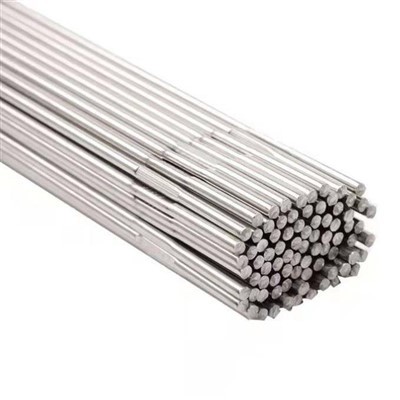
When it comes to the manufacturing of high - performance components, titanium forgings stand out due to their excellent strength - to - weight ratio, corrosion resistance, and high - temperature performance. As a leading titanium forgings supplier, we have in - depth knowledge of different titanium alloys and their forgability characteristics. In this blog, we will explore the forgability of various titanium alloys used in forgings.
1. Introduction to Titanium Forgings
Titanium forgings are widely used in aerospace, automotive, medical, and other industries. Titanium Alloy Forgings are produced by shaping titanium alloys through the forging process, which involves applying compressive forces to the metal at elevated temperatures. The choice of titanium alloy significantly impacts the forging process, as different alloys have distinct properties that affect their workability.
2. Common Titanium Alloys Used in Forgings and Their Forgability
2.1 Ti - 6Al - 4V (Grade 5)
Ti - 6Al - 4V is one of the most commonly used titanium alloys in forgings. It is an alpha - beta alloy, which means it contains both alpha and beta phases. This alloy offers a good combination of strength, ductility, and corrosion resistance.
Forgability Characteristics:
- Temperature Range: Ti - 6Al - 4V has a relatively wide forging temperature range, typically between 925 - 1040°C (1700 - 1900°F). This wide range provides some flexibility during the forging process, allowing for better control of the final microstructure and mechanical properties.
- Deformation Resistance: It has moderate deformation resistance, which means it can be forged with reasonable forging pressures. However, as the temperature decreases during forging, the deformation resistance increases, and it becomes more difficult to shape the alloy.
- Microstructure Control: During forging, careful control of the forging temperature and deformation rate is crucial to obtain the desired microstructure. A proper forging process can result in a fine - grained microstructure, which enhances the mechanical properties of the final forging.
2.2 Ti - 5Al - 2.5Sn (Grade 6)
Ti - 5Al - 2.5Sn is an alpha - type titanium alloy. It is known for its high - temperature strength and excellent creep resistance.
Forgability Characteristics:
- Temperature Sensitivity: This alloy has a narrower forging temperature range compared to Ti - 6Al - 4V, usually around 980 - 1065°C (1800 - 1950°F). It is more temperature - sensitive, and small variations in forging temperature can have a significant impact on the forging process and the final properties of the forging.
- Deformation Behavior: Ti - 5Al - 2.5Sn has relatively high deformation resistance, especially at lower temperatures. Therefore, higher forging pressures are required during the forging process. Special care must be taken to ensure uniform deformation to avoid cracking or other defects.
- Microstructure and Properties: The forging process should be carefully designed to maintain the alpha - phase microstructure, which is responsible for its high - temperature performance. Improper forging can lead to the formation of undesirable phases, which may degrade the mechanical properties.
2.3 Ti - 8Al - 1Mo - 1V
Ti - 8Al - 1Mo - 1V is an alpha - beta alloy that offers high strength and good fatigue resistance.
Forgability Characteristics:
- Forging Temperature: The forging temperature of Ti - 8Al - 1Mo - 1V is typically in the range of 950 - 1050°C (1740 - 1920°F). Similar to other titanium alloys, maintaining the proper forging temperature is essential for achieving good forgability.
- Work Hardening: This alloy has a relatively high work - hardening rate. As the alloy is deformed during forging, its strength increases rapidly, which can make further deformation more difficult. Intermediate annealing steps may be required during the forging process to reduce the work - hardening effect and improve the formability.
- Surface Quality: During forging, it is important to prevent surface oxidation, which can affect the surface quality and mechanical properties of the forging. Special coatings or protective atmospheres may be used to minimize oxidation.
3. Factors Affecting Forgability of Titanium Alloys
3.1 Alloy Composition
The chemical composition of titanium alloys plays a vital role in their forgability. Different alloying elements have different effects on the phase structure, deformation behavior, and mechanical properties of the alloy. For example, aluminum increases the strength and stability of the alpha phase, while vanadium and molybdenum promote the formation of the beta phase, which can improve the ductility and formability of the alloy.


3.2 Forging Temperature
As mentioned above, the forging temperature is a critical factor. Each titanium alloy has an optimal forging temperature range. Forging outside this range can lead to problems such as excessive deformation resistance, cracking, or the formation of undesirable microstructures.
3.3 Deformation Rate
The deformation rate during forging also affects the forgability of titanium alloys. A high deformation rate can increase the deformation resistance and may cause cracking, especially in alloys with low ductility. On the other hand, a very low deformation rate may lead to grain growth and a decrease in the mechanical properties of the final forging.
3.4 Microstructure
The initial microstructure of the titanium alloy before forging can influence its forgability. A fine - grained microstructure generally has better formability than a coarse - grained one. Therefore, proper heat treatment or pre - processing steps may be required to obtain the desired initial microstructure.
4. Our Capabilities as a Titanium Forgings Supplier
As a titanium forgings supplier, we have extensive experience in forging different titanium alloys. We use advanced forging equipment and techniques to ensure the high quality of our Titanium Profiled Forgings.
- Precision Forging: We are capable of achieving high - precision forging, which can meet the strict dimensional requirements of various industries. Our forging processes are designed to minimize material waste and improve the efficiency of production.
- Microstructure Control: We have a deep understanding of the relationship between forging parameters and microstructure. Through precise control of the forging temperature, deformation rate, and other parameters, we can obtain the desired microstructure and mechanical properties of the titanium forgings.
- Quality Assurance: We implement a strict quality control system throughout the forging process. From raw material inspection to final product testing, we ensure that each forging meets the highest quality standards.
5. Conclusion and Call to Action
In conclusion, different titanium alloys have distinct forgability characteristics, which are influenced by factors such as alloy composition, forging temperature, deformation rate, and microstructure. Understanding these characteristics is essential for successful forging and the production of high - quality titanium forgings.
If you are in need of high - quality titanium forgings, whether it is for aerospace, automotive, or other applications, we are here to help. Our team of experts can provide you with customized solutions based on your specific requirements. Contact us today to discuss your titanium forging needs and start a successful business partnership.
References
- Boyer, R. R., Welsch, G., & Collings, E. W. (1994). Materials Properties Handbook: Titanium Alloys. ASM International.
- Semiatin, S. L., & Alexander, D. J. (2001). Forging of Titanium Alloys. ASM Handbook, Volume 14A: Metalworking: Forging.