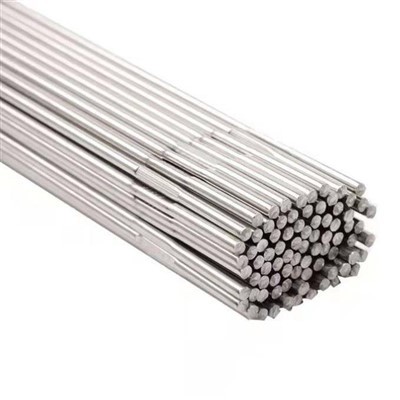
Hey there! As a supplier of titanium tubes, I've been getting a lot of questions lately about the impact resistance of these bad boys. So, I thought I'd take a deep dive into this topic and share everything I know with you.
First off, let's talk about what impact resistance actually means. In simple terms, it's the ability of a material to withstand sudden forces or shocks without breaking, cracking, or deforming permanently. When it comes to titanium tubes, their impact resistance is one of the key factors that make them so popular in a wide range of industries.
What Makes Titanium Tubes Resistant to Impact?
Titanium is a unique metal with some amazing properties. One of the main reasons it has good impact resistance is its high strength - to - weight ratio. Titanium is incredibly strong, yet it's much lighter than steel. This means that it can absorb a significant amount of energy during an impact without adding excessive weight to the structure.
Another factor is its excellent ductility. Ductility refers to a material's ability to deform under stress without breaking. Titanium can stretch and bend to a certain extent when hit by an impact, which helps it dissipate the energy of the impact rather than shattering immediately.
Moreover, titanium has a high fracture toughness. Fracture toughness is a measure of a material's resistance to the propagation of cracks. Even if a crack starts to form in a titanium tube during an impact, the high fracture toughness of titanium prevents the crack from spreading rapidly, thus maintaining the integrity of the tube.
Applications Where Impact Resistance Matters
The high impact resistance of titanium tubes makes them suitable for many applications. In the aerospace industry, for example, titanium tubes are used in aircraft hydraulic systems. These systems need to withstand the vibrations and sudden impacts that occur during takeoff, flight, and landing. A failure in the hydraulic system due to a lack of impact resistance could have catastrophic consequences, so titanium's ability to handle these forces is crucial.
In the automotive industry, titanium tubes are sometimes used in exhaust systems. The exhaust system is exposed to various impacts from road debris, bumps, and vibrations. Titanium tubes can withstand these impacts better than many other materials, ensuring the long - term reliability of the exhaust system.


Marine applications also benefit from the impact resistance of titanium tubes. In boats and ships, the tubes are used in seawater cooling systems and other critical components. They need to withstand the constant pounding of waves and the occasional impact from floating objects. Titanium's corrosion resistance, combined with its impact resistance, makes it an ideal choice for these harsh marine environments.
Comparing Titanium Tubes with Other Materials
Let's compare titanium tubes with some other common materials in terms of impact resistance. Steel is a well - known strong material, but it's much heavier than titanium. While steel can also have good impact resistance, the added weight can be a drawback in applications where weight is a concern, like in aerospace.
Aluminum is another lightweight metal, but it generally has lower impact resistance compared to titanium. Aluminum is more prone to cracking and deformation under high - impact forces. So, when you need a material that can handle tough impacts without being too heavy, titanium tubes are a great option.
Testing the Impact Resistance of Titanium Tubes
To ensure the quality and performance of our titanium tubes, we conduct various tests to measure their impact resistance. One common test is the Charpy impact test. In this test, a notched specimen of the titanium tube is struck by a pendulum, and the energy absorbed during the fracture is measured. The higher the energy absorbed, the better the impact resistance of the tube.
We also perform drop - weight tests, where a heavy weight is dropped onto the titanium tube from a certain height. By varying the height and weight, we can simulate different levels of impact and assess how the tube responds. These tests help us guarantee that our titanium tubes meet the high - impact requirements of our customers.
Factors Affecting the Impact Resistance of Titanium Tubes
There are a few factors that can affect the impact resistance of titanium tubes. The alloy composition plays a big role. Different titanium alloys have different properties, and some alloys are specifically designed to have better impact resistance. For example, the Ti - 6Al - 4V alloy is widely used because it offers a good balance of strength, ductility, and impact resistance.
The manufacturing process also matters. Tubes that are manufactured using high - quality processes, such as seamless tube production, tend to have more consistent properties and better impact resistance. Heat treatment can also improve the impact resistance of titanium tubes by optimizing their microstructure.
Why Choose Our Titanium Tubes?
As a supplier, we take pride in offering high - quality titanium tubes with excellent impact resistance. We source our titanium from reliable suppliers and use advanced manufacturing techniques to ensure the best possible quality. Our tubes are thoroughly tested to meet or exceed industry standards.
Whether you're in the aerospace, automotive, marine, or any other industry that requires impact - resistant materials, our titanium tubes can meet your needs. You can check out our Titanium Alloy Tubing and Titanium Alloy Pipe pages to learn more about our product range.
Let's Talk Business
If you're interested in purchasing titanium tubes for your project, I'd love to have a chat with you. Whether you need a small quantity for a prototype or a large order for mass production, we can work together to find the right solution for you. Don't hesitate to reach out to us to discuss your requirements and get a quote.
References
- ASM Handbook Volume 2: Properties and Selection: Nonferrous Alloys and Special - Purpose Materials.
- "Titanium: A Technical Guide" by Don Eylon.
- Various industry research papers on the mechanical properties of titanium alloys.