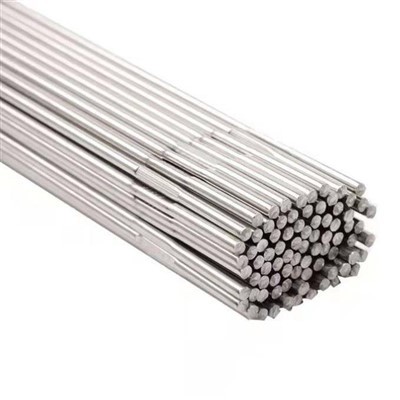
Yo, folks! As a supplier of Titanium Alloy Rods, I get asked a ton about what the elongation of a titanium alloy rod is. So, I thought I'd break it down in this blog post.
First off, let's talk about what elongation actually means. In simple terms, elongation is the amount that a material stretches or deforms when it's pulled. When we're talking about a titanium alloy rod, we're interested in how much it can stretch before it breaks. It's a super important property, especially when you're using these rods in applications where they'll be under stress.
Titanium alloy rods are known for their excellent strength - to - weight ratio and corrosion resistance. But their elongation properties can vary quite a bit depending on a few factors.
One of the big factors is the specific alloy composition. Different alloys have different amounts of elements like aluminum, vanadium, and others added to the base titanium. For example, the well - known Ti - 6Al - 4V alloy is widely used in aerospace and medical applications. This alloy typically has an elongation in the range of 10% - 18%. That means if you have a 100 - mm long rod, it can stretch up to 18 mm before it fails under a tensile load.
Another factor that affects elongation is the manufacturing process. There are different ways to make titanium alloy rods, such as forging, rolling, and using pure titanium as the base.
Let's start with forging. Titanium Forging Bar is made by heating the titanium alloy and then using mechanical force to shape it. Forged rods often have better mechanical properties, including elongation. The forging process can align the grain structure of the metal, which can improve its ductility. This means that a forged titanium alloy rod might be able to stretch a bit more compared to a rod made by other methods.
On the other hand, Titanium Rolling Bar is produced by passing the metal through a series of rollers. This process can also affect the grain structure and, in turn, the elongation. Rolling can make the rod more uniform in shape and size, but it might have a different effect on the elongation depending on the rolling parameters like temperature and pressure.
If you're considering Pure Titanium Rod, pure titanium has its own unique elongation characteristics. It's generally more ductile than some of the high - strength titanium alloys. Pure titanium rods can often have higher elongation values, sometimes up to 25% or more. But they might not have the same strength as the alloyed rods, so it really depends on what your application needs.
The heat treatment of the titanium alloy rod also plays a crucial role in determining its elongation. Heat treatment can change the microstructure of the metal. For example, annealing is a common heat - treatment process where the rod is heated to a specific temperature and then slowly cooled. This can relieve internal stresses in the rod and make it more ductile, increasing its elongation.
When you're using titanium alloy rods in real - world applications, understanding elongation is vital. In aerospace, for instance, the rods need to be able to withstand the forces during flight. If the elongation is too low, the rods might break under the stress, which could be catastrophic. In the medical field, where titanium alloy rods are used in implants, elongation is important because the rods need to be able to bend and stretch a bit without breaking when the body moves.
Now, let's talk about how we measure the elongation of a titanium alloy rod. The most common way is through a tensile test. In a tensile test, a sample of the rod is placed in a testing machine. The machine slowly pulls on the sample at a constant rate until it breaks. During the test, the machine measures the force applied and the amount of stretch. The elongation is then calculated as the percentage increase in the length of the sample compared to its original length.
It's also important to note that the environment can affect the elongation of a titanium alloy rod. For example, high temperatures can make the metal more ductile, which means it can stretch more. But in a corrosive environment, the surface of the rod might be damaged, which can reduce its elongation and overall strength.
As a supplier, I always make sure to provide accurate information about the elongation of the titanium alloy rods we sell. We test each batch of rods to ensure they meet the required standards. And we're always happy to help our customers choose the right rod for their specific application based on the elongation and other properties.
If you're in the market for titanium alloy rods, whether it's for aerospace, medical, or any other application, I encourage you to reach out to us. We can have a detailed discussion about your needs, the elongation requirements, and which type of rod would be the best fit for you. Whether it's a Titanium Forging Bar, Pure Titanium Rod, or Titanium Rolling Bar, we've got you covered. So, don't hesitate to start a conversation with us and let's find the perfect solution for your project.
References


- "Titanium: A Technical Guide" by J. R. Davis
- ASTM standards for titanium alloy testing
- Various research papers on titanium alloy properties and manufacturing processes