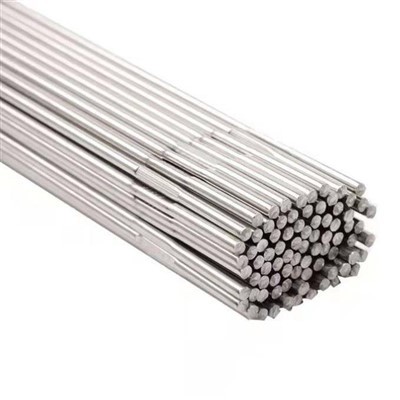
Titanium is a remarkable metal known for its high strength, low density, and excellent corrosion resistance. As a leading supplier of titanium round rods, I often get asked about the density of these products. In this blog, I'll be diving into the details of what the density of titanium round rods is, why it matters, and how it compares to other materials.
Understanding Density
Before we discuss the density of titanium round rods, let's first understand what density means. Density is defined as the mass per unit volume of a substance. It is typically measured in grams per cubic centimeter (g/cm³) or kilograms per cubic meter (kg/m³). In simpler terms, density tells us how much “stuff” is packed into a given amount of space. A high - density material means there is a large amount of mass in a small volume, while a low - density material has less mass spread over the same volume.
The Density of Titanium Round Rods
The density of pure titanium is approximately 4.506 g/cm³ at room temperature (20°C or 68°F). This value makes titanium a relatively low - density metal. When it comes to titanium round rods, the density remains close to this figure, although it can vary slightly depending on factors such as the alloying elements used and the manufacturing process.
Titanium alloys are commonly used in the production of round rods to enhance specific properties such as strength, hardness, and heat resistance. Different alloys have different compositions, and thus, their densities can deviate from that of pure titanium. For example, some common titanium alloys like Ti - 6Al - 4V (an alloy containing 6% aluminum and 4% vanadium) has a density of about 4.43 g/cm³.


The manufacturing process can also influence density. For instance, if there are any porosity or voids within the titanium round rod, the effective density will be lower. On the other hand, a well - made rod with a consistent and homogeneous structure will closely match the theoretical density of the base titanium or its alloy.
Why Density Matters
The density of titanium round rods is a crucial factor in many applications. Here are some reasons why:
Weight - sensitive Applications
In industries such as aerospace, automotive, and marine, weight is a critical consideration. Titanium's low density makes it an ideal choice for components where reducing weight is essential without sacrificing strength. For example, in aircraft construction, using titanium round rods can reduce the overall weight of the aircraft, leading to better fuel efficiency and increased payload capacity.
Cost - effectiveness
Since titanium is a relatively expensive metal, understanding its density helps in optimizing material usage. By knowing the density, engineers and designers can calculate the exact amount of titanium needed for a particular project, minimizing waste and cost.
Material Compatibility
Density also plays a role in determining how titanium round rods interact with other materials in a composite structure. For example, in a hybrid material design where titanium is combined with other metals or polymers, the difference in density between the materials can affect the overall mechanical properties and performance of the structure.
Comparing Titanium's Density with Other Materials
To better appreciate the significance of titanium's density, let's compare it with some other well - known metals:
Steel
Steel is one of the most widely used metals in various industries. The density of mild steel is around 7.85 g/cm³, which is significantly higher than that of titanium. This means that for a given volume, a steel rod will weigh almost twice as much as a titanium rod. While steel is strong, its high density can be a drawback in applications where weight is a concern.
Aluminum
Aluminum is another popular lightweight metal with a density of approximately 2.7 g/cm³. Although aluminum is lighter than titanium, it generally has lower strength. Titanium offers a better balance between strength and weight, making it suitable for more demanding applications where both properties are required.
Applications of Titanium Round Rods Based on Density
Aerospace Industry
As mentioned earlier, the aerospace industry benefits greatly from the low density of titanium round rods. They are used in the construction of airframes, engine components, and landing gear. The reduced weight allows airplanes to fly more efficiently, while the high strength of titanium ensures the safety and durability of these critical components.
Medical Field
In the medical field, titanium round rods are used to make implants such as bone screws and dental implants. Their low density means that they put less stress on the surrounding tissues, and their high corrosion resistance ensures that they can remain in the body for long periods without causing adverse reactions.
Chemical Processing
Titanium's corrosion resistance and relatively low density make it an excellent choice for the chemical processing industry. Round rods are used in the construction of reactors, heat exchangers, and pipeline systems to handle corrosive chemicals.
Related Titanium Products
If you are interested in other titanium products, we also offer Titanium Filler Rod Welding which is essential for joining titanium parts together in various welding applications. Our Titanium Forging Bar has excellent mechanical properties and can be used in high - stress applications. And for those who need a different shape, our Titanium Hex Bar provides an alternative option with its hexagonal cross - section.
Conclusion
The density of titanium round rods, around 4.506 g/cm³ for pure titanium and slightly different for alloys, is a key characteristic that makes this material highly valuable in a wide range of industries. Its low density combined with high strength, corrosion resistance, and other beneficial properties make it a top choice for applications where weight, performance, and durability are important.
If you are in the market for high - quality titanium round rods or any of our related products, we invite you to contact us for a detailed discussion. Our team of experts is ready to assist you in finding the right solutions for your specific needs. Whether you're working on a small - scale project or a large - scale industrial application, we have the products and expertise to meet your requirements. Reach out to us today to start the conversation about your titanium rod needs.
References
- ASM Handbook Volume 2: Properties and Selection: Nonferrous Alloys and Special - Purpose Materials. ASM International.
- Titanium: A Technical Guide. John R. Davis (Editor). ASM International.