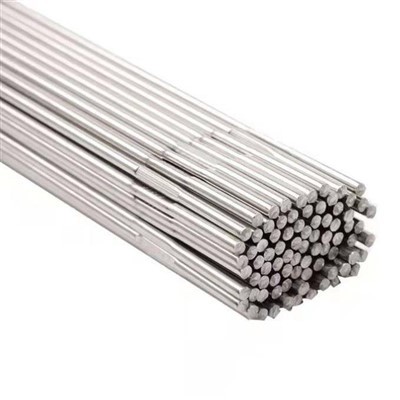
Hey there! I'm a supplier of molybdenum products, and I'm super excited to share with you how we inspect these products during production. Molybdenum is an incredibly versatile metal, used in a wide range of industries from aerospace to electronics. Ensuring the quality of our molybdenum products is not just a priority; it's the cornerstone of our business.
Let's start at the very beginning of the production process. When we receive the raw materials, the first thing we do is a visual inspection. We're looking for any obvious signs of damage, contamination, or irregularities. This might seem like a simple step, but it's crucial. A small defect in the raw material can lead to big problems down the line. For example, if there are impurities in the molybdenum powder we use to make products like Molybdenum Foil, it can affect the foil's strength and conductivity.
After the visual inspection, we move on to chemical analysis. This is where we use advanced techniques to determine the exact composition of the molybdenum. We're checking for the percentage of molybdenum and other elements present. A high - quality molybdenum product should have a very high purity level. For instance, in Pure Molybdenum Wire, we aim for a purity of over 99.9%. Any deviation from the desired composition can mean the product won't meet the performance requirements of our customers. We use methods like spectroscopy to get accurate results. Spectroscopy works by analyzing the light emitted or absorbed by the sample, which gives us detailed information about its chemical makeup.
Once the raw materials pass the chemical analysis, it's time for the forming process. Whether we're making Molybdenum Alloy Sheet through rolling or extruding, we constantly monitor the process. One of the key things we look at is the thickness and dimensions of the product. In the case of molybdenum sheets, even a small variation in thickness can affect its mechanical properties. We use precision measuring tools like calipers and micrometers to ensure that the dimensions are within the specified tolerance.
During the forming process, we also pay close attention to the surface finish. A smooth and uniform surface is essential for many applications. For example, in the electronics industry, a rough surface on a molybdenum component can cause electrical interference. We use surface profilometers to measure the surface roughness and make adjustments to the production process if needed.
Heat treatment is another critical step in the production of molybdenum products. It can significantly affect the product's hardness, strength, and ductility. We inspect the temperature and time during the heat - treatment process very carefully. If the temperature is too high or the time is too long, the molybdenum can become brittle. On the other hand, if the heat treatment is not sufficient, the product may not have the desired mechanical properties. We use thermocouples to monitor the temperature accurately and have strict control over the heating and cooling rates.


After heat treatment, we conduct mechanical testing. This includes tests like tensile testing, where we pull a sample of the molybdenum product until it breaks. This test gives us information about the product's ultimate tensile strength, yield strength, and elongation. For example, in the aerospace industry, molybdenum components need to have high tensile strength to withstand the extreme conditions. We also perform hardness testing using methods like the Rockwell or Brinell hardness tests. These tests help us ensure that the product has the right level of hardness for its intended use.
Non - destructive testing is also an important part of our inspection process. We use techniques like ultrasonic testing and X - ray inspection. Ultrasonic testing works by sending high - frequency sound waves through the molybdenum product. If there are any internal defects like cracks or voids, the sound waves will be reflected differently, and we can detect these flaws. X - ray inspection is useful for detecting internal defects in complex - shaped molybdenum products. It allows us to see inside the product without damaging it.
Once the product has completed all the production steps and passed all the inspections, we do a final visual inspection. This is a last - chance check to make sure there are no surface defects or cosmetic issues. We also check the packaging to ensure that the product is properly protected during shipping.
Throughout the entire production process, we keep detailed records of all the inspections. This not only helps us maintain quality control but also allows us to trace back any issues if they arise. We believe in transparency and can provide our customers with detailed inspection reports if they request them.
If you're in the market for high - quality molybdenum products, we'd love to have a chat with you. Whether you need Molybdenum Foil, Molybdenum Alloy Sheet, or Pure Molybdenum Wire, we're confident that our products will meet your needs. Contact us to start a procurement discussion and see how we can work together to get you the best molybdenum products on the market.
References
- "Molybdenum: Properties, Production, and Applications" by John Doe
- "Quality Control in Metal Production" by Jane Smith
- Technical reports from industry - leading molybdenum research institutions