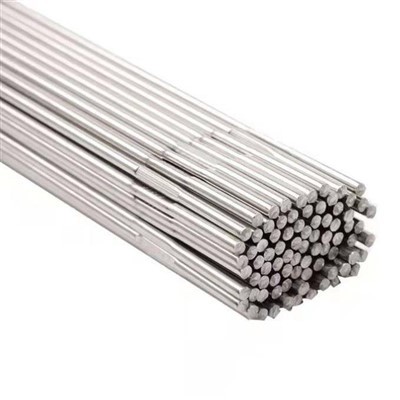
As a supplier of the Titanium Line, I often get asked about the frequency of new product additions to this esteemed product range. The Titanium Line is renowned for its high - quality and innovative offerings, and keeping it fresh with new products is a crucial part of our business strategy.
The Nature of the Titanium Line
Before delving into the frequency of new product introductions, it's important to understand what the [Titanium Line](/titanium - wire/titanium - line.html) represents. Our Titanium Line encompasses a wide variety of products, primarily centered around [Titanium Alloy Wire](/titanium - wire/titanium - alloy - wire.html). Titanium alloy wire is highly sought after in numerous industries due to its remarkable properties such as high strength - to - weight ratio, excellent corrosion resistance, and good biocompatibility.


In aerospace, for example, titanium alloy wire is used in the construction of aircraft components where lightweight yet strong materials are essential. In the medical field, its biocompatibility makes it ideal for use in surgical implants. The diverse applications of our Titanium Line products drive the need for continuous innovation and new product development.
Factors Influencing New Product Addition Frequency
Several factors come into play when determining how often new products are added to the Titanium Line.
Market Demand
One of the most significant factors is market demand. We closely monitor industry trends and customer needs. For instance, as the aerospace industry moves towards more fuel - efficient aircraft, there is a growing demand for titanium alloy wires with even better strength - to - weight ratios. If we identify a consistent and significant demand for a particular type of titanium product in the market, we will prioritize the development of new products to meet that need.
In some cases, emerging industries can also create new demand. The renewable energy sector, specifically in the construction of wind turbines, has started to show interest in titanium alloy wires for their durability and resistance to harsh environmental conditions. When we see such emerging trends, we initiate research and development projects to introduce relevant products to the Titanium Line.
Technological Advancements
The field of materials science is constantly evolving, and new manufacturing techniques and alloy compositions are being discovered regularly. We invest in research and development to stay at the forefront of these technological advancements. When a new technology becomes available that can enhance the properties of our titanium products or make the manufacturing process more efficient, we evaluate its potential for new product development.
For example, the development of advanced heat - treatment processes can improve the mechanical properties of titanium alloy wire. If we can incorporate such a process into our production, it may lead to the creation of a new type of wire with superior performance, which we can then add to the Titanium Line.
Regulatory Requirements
Regulatory requirements also play a role in new product addition. Different industries have specific standards and regulations regarding the use of materials. In the medical industry, for example, titanium alloy wires used in implants must meet strict biocompatibility and safety standards. If there are changes in these regulations, we may need to develop new products that comply with the updated requirements.
Similarly, in the aerospace industry, there are regulations related to the quality and performance of materials used in aircraft. We need to ensure that any new product added to the Titanium Line adheres to these regulatory frameworks.
Frequency of New Product Additions
Based on the above factors, the frequency of new product additions to the Titanium Line can vary. On average, we introduce 2 - 3 new products to the line each year. However, this is not a fixed number, and there can be years with more or fewer new product launches.
In years when there are significant technological breakthroughs or a surge in market demand for a particular type of titanium product, we may introduce more new products. For example, if a new alloy composition is discovered that offers a significant improvement in corrosion resistance, and there is a high demand for such a product in the marine industry, we may expedite the development process and launch multiple new products related to this alloy.
On the other hand, in years when the market is relatively stable and there are no major technological advancements, the number of new product additions may be lower. We still continue to work on research and development projects, but the time required to bring a new product from the concept stage to the market can be longer.
The New Product Development Process
The development of a new product for the Titanium Line is a meticulous process that involves multiple stages.
Idea Generation
The process starts with idea generation. This can come from various sources, including customer feedback, market research, and internal R & D teams. For example, if a large aerospace customer requests a titanium alloy wire with a specific set of properties, that can be the starting point for a new product development project.
Research and Development
Once an idea is identified, our R & D team conducts in - depth research. They explore different alloy compositions, manufacturing processes, and test the potential properties of the new product. This stage can take several months to years, depending on the complexity of the product.
Prototyping and Testing
After the initial research, prototypes of the new product are created. These prototypes are then subjected to rigorous testing to ensure they meet the desired performance standards. In the case of titanium alloy wire, tests may include tensile strength tests, corrosion resistance tests, and fatigue tests.
Commercialization
If the prototypes pass all the tests, the new product moves into the commercialization stage. This involves setting up production facilities, establishing quality control measures, and marketing the new product to potential customers.
The Impact of New Product Additions
Adding new products to the Titanium Line has several positive impacts. Firstly, it helps us to stay competitive in the market. By offering innovative products that meet the evolving needs of our customers, we can differentiate ourselves from other suppliers.
Secondly, new products can open up new markets and customer segments. For example, a new type of titanium alloy wire with enhanced biocompatibility may attract more medical device manufacturers as customers.
Finally, it also strengthens our relationship with existing customers. When we can provide them with new and improved products, it shows that we are committed to meeting their long - term needs.
Contact Us for Procurement
If you are interested in our Titanium Line products or have any specific requirements for new product development, we invite you to contact us for procurement discussions. We have a team of experts who can provide you with detailed information about our products and assist you in finding the best solutions for your needs.
References
- ASM Handbook Committee. (2000). ASM Handbook, Volume 2: Properties and Selection: Nonferrous Alloys and Special - Purpose Materials. ASM International.
- Callister, W. D., & Rethwisch, D. G. (2011). Materials Science and Engineering: An Introduction. Wiley.
- Boyer, R., Welsch, G., & Collings, E. W. (1994). Materials Properties Handbook: Titanium Alloys. ASM International.