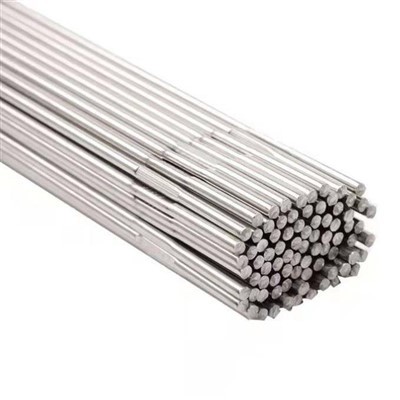
As a dedicated supplier of Titanium Alloy Wire, I often encounter inquiries from clients regarding various properties of our products. One such frequently asked question is about the Poisson's ratio of titanium alloy wire. In this blog, I'll delve into what the Poisson's ratio is, its significance for titanium alloy wire, and how it impacts the applications of our Titanium Alloy Wire.
Understanding Poisson's Ratio
Before we explore the Poisson's ratio of titanium alloy wire, it's essential to understand what Poisson's ratio represents. Poisson's ratio (ν) is a measure of the Poisson effect, which describes the behavior of a material when it is subjected to axial loading. When a material is stretched or compressed in one direction, it will simultaneously contract or expand in the perpendicular directions. Poisson's ratio is defined as the negative ratio of the transverse strain (ε_transverse) to the axial strain (ε_axial) within the elastic limit of the material:
ν = - ε_transverse / ε_axial
For example, if you stretch a rubber band lengthwise, it will become thinner in the width and thickness directions. The Poisson's ratio quantifies this relationship between the lengthwise stretching and the widthwise contraction.
Poisson's Ratio of Titanium Alloy Wire
Titanium alloy wire is known for its excellent combination of high strength, low density, and good corrosion resistance. The Poisson's ratio of titanium alloy wire typically ranges from about 0.32 to 0.34. This value can vary slightly depending on the specific alloy composition, heat treatment, and manufacturing process of the wire.
The relatively consistent Poisson's ratio within this range is a testament to the stable mechanical properties of titanium alloy wire. The value indicates that when the wire is stretched axially, it will contract transversely by approximately 32 - 34% of the axial strain. This behavior is crucial for understanding how the wire will perform under different loading conditions.
Significance of Poisson's Ratio for Titanium Alloy Wire
The Poisson's ratio has several important implications for the use of titanium alloy wire in various applications:
Structural Integrity
In structural applications, such as aerospace components or medical implants, the Poisson's ratio affects the overall structural integrity of the part. When a titanium alloy wire is part of a larger structure, its transverse contraction or expansion due to axial loading can influence the stress distribution within the structure. A proper understanding of the Poisson's ratio helps engineers design structures that can withstand the expected loads without failure.
Manufacturing Processes
During manufacturing processes like drawing or rolling, the Poisson's ratio of titanium alloy wire plays a role in determining the dimensional changes of the wire. For example, when the wire is drawn through a die to reduce its diameter, the transverse contraction predicted by the Poisson's ratio needs to be considered to ensure that the final product meets the required specifications.
Material Selection
The Poisson's ratio can also be a factor in material selection. Different materials have different Poisson's ratios, and choosing a material with an appropriate Poisson's ratio is essential for optimizing the performance of a component. Titanium alloy wire's Poisson's ratio makes it a suitable choice for applications where a balance between axial and transverse deformation is required.
Applications of Titanium Alloy Wire and Poisson's Ratio
Titanium alloy wire finds a wide range of applications across various industries, and the Poisson's ratio influences its performance in each of these applications:
Aerospace Industry
In the aerospace industry, titanium alloy wire is used in components such as aircraft engine parts, landing gear, and structural reinforcements. The high strength - to - weight ratio of titanium alloy wire, combined with its predictable Poisson's ratio, makes it ideal for these applications. When the wire is subjected to the high stresses and strains experienced during flight, its Poisson's ratio helps maintain the structural integrity of the components.
Medical Industry
In the medical field, titanium alloy wire is used in implants like orthopedic screws, dental wires, and cardiovascular stents. The biocompatibility of titanium alloy, along with its appropriate Poisson's ratio, allows the implants to mimic the mechanical behavior of human tissues. This reduces the risk of implant failure and improves the overall success of medical procedures.
Marine Industry
In the marine industry, Titanium Line is used for mooring lines, cables, and other underwater structures. The corrosion resistance of titanium alloy wire, combined with its known Poisson's ratio, ensures that the wire can withstand the harsh marine environment and the dynamic loads exerted by waves and currents.
Testing and Quality Control of Poisson's Ratio
As a supplier of titanium alloy wire, we take the quality of our products very seriously. To ensure that our titanium alloy wire meets the required Poisson's ratio specifications, we conduct rigorous testing during the manufacturing process.
We use advanced testing equipment, such as strain gauges and extensometers, to measure the axial and transverse strains of the wire samples under controlled loading conditions. By calculating the Poisson's ratio from these measurements, we can verify that the wire's mechanical properties are within the acceptable range.
In addition to testing individual samples, we also implement a comprehensive quality control system that includes raw material inspection, in - process monitoring, and final product testing. This ensures that every batch of titanium alloy wire we supply meets the highest quality standards.


Conclusion
The Poisson's ratio of titanium alloy wire is a fundamental mechanical property that has significant implications for its performance in various applications. Understanding the Poisson's ratio helps engineers design better products, manufacturers control the quality of the wire, and end - users select the most suitable material for their needs.
As a supplier of Titanium Alloy Wire, we are committed to providing high - quality products with consistent mechanical properties. Our in - depth knowledge of the Poisson's ratio and other properties of titanium alloy wire allows us to offer technical support and guidance to our clients.
If you are interested in learning more about our titanium alloy wire or have specific requirements for your project, we invite you to contact us for a detailed discussion. We look forward to the opportunity to work with you and provide the best solutions for your needs.
References
- Callister, W. D., & Rethwisch, D. G. (2017). Materials Science and Engineering: An Introduction. Wiley.
- ASM Handbook Committee. (2000). ASM Handbook Volume 2: Properties and Selection: Nonferrous Alloys and Special - Purpose Materials. ASM International.