


As a supplier of pure titanium plates, I often get asked about the oxidation resistance of these remarkable materials. Oxidation resistance is a crucial property, especially in industries where materials are exposed to harsh environments, high temperatures, or corrosive substances. In this blog, I'll delve into the oxidation resistance of pure titanium plates, exploring the science behind it, its practical implications, and how it compares to other materials.
The Science of Oxidation Resistance in Pure Titanium
Titanium is a highly reactive metal, but it forms a thin, stable oxide layer on its surface when exposed to oxygen. This oxide layer, primarily composed of titanium dioxide (TiO₂), acts as a protective barrier that prevents further oxidation of the underlying metal. The formation of this oxide layer is a self - healing process. If the surface is scratched or damaged, the exposed titanium reacts with oxygen in the air or the surrounding environment to quickly reform the protective layer.
The stability of the TiO₂ layer is due to its strong chemical bonds and its ability to adhere tightly to the titanium substrate. At room temperature, the oxide layer is extremely thin, on the order of a few nanometers. However, as the temperature increases, the rate of oxidation also increases, and the oxide layer thickens.
Factors Affecting Oxidation Resistance
Temperature
Temperature plays a significant role in the oxidation resistance of pure titanium plates. At low temperatures (below 300°C), the oxidation rate is very slow, and the protective oxide layer remains stable. However, as the temperature rises above 300°C, the oxidation rate increases exponentially. At high temperatures (above 600°C), the oxide layer may start to spall or crack, reducing its protective effectiveness.
Oxygen Concentration
The concentration of oxygen in the environment also affects the oxidation rate. In environments with high oxygen concentrations, such as air, the oxidation rate is faster compared to environments with low oxygen concentrations, such as an inert gas atmosphere.
Surface Finish
The surface finish of the pure titanium plate can influence its oxidation resistance. A smooth surface finish promotes the formation of a more uniform and adherent oxide layer, which enhances oxidation resistance. Rough surfaces, on the other hand, may have defects or crevices where oxidation can initiate more easily.
Practical Implications of Oxidation Resistance
Aerospace Industry
In the aerospace industry, pure titanium plates are widely used due to their high strength - to - weight ratio and excellent oxidation resistance. Components such as engine parts, airframe structures, and landing gear are often made from titanium. The oxidation resistance of titanium ensures that these components can withstand the high temperatures and oxidative environments encountered during flight.
Chemical Processing Industry
In the chemical processing industry, pure titanium plates are used in equipment such as reactors, heat exchangers, and piping systems. The oxidation resistance of titanium makes it resistant to a wide range of corrosive chemicals, including acids, alkalis, and salts. This property allows titanium equipment to have a long service life in harsh chemical environments.
Medical Industry
Titanium is biocompatible and has good oxidation resistance, making it an ideal material for medical implants. Implants such as hip and knee replacements, dental implants, and bone plates are often made from titanium. The oxidation resistance of titanium ensures that the implants do not corrode in the human body, reducing the risk of adverse reactions.
Comparison with Other Materials
Stainless Steel
Stainless steel is another commonly used material with good corrosion and oxidation resistance. However, compared to pure titanium, stainless steel has a lower oxidation resistance at high temperatures. Titanium can withstand higher temperatures without significant oxidation, making it more suitable for applications in high - temperature environments.
Aluminum
Aluminum also forms a protective oxide layer on its surface. However, the oxide layer on aluminum is less stable than that on titanium, especially at high temperatures. Aluminum has a lower melting point and is more prone to oxidation and corrosion in certain environments compared to titanium.
Enhancing Oxidation Resistance
There are several methods to enhance the oxidation resistance of pure titanium plates. One common method is surface treatment, such as anodizing. Anodizing involves creating a thicker and more uniform oxide layer on the surface of the titanium plate through an electrochemical process. This thicker oxide layer provides better protection against oxidation.
Another method is alloying. Adding small amounts of other elements, such as aluminum, vanadium, or palladium, to titanium can improve its oxidation resistance. These alloying elements can enhance the stability of the oxide layer or form additional protective phases in the alloy.

Conclusion
The oxidation resistance of pure titanium plates is a remarkable property that makes them suitable for a wide range of applications in various industries. The self - healing oxide layer formed on the surface of titanium provides excellent protection against oxidation, even in harsh environments. However, factors such as temperature, oxygen concentration, and surface finish can affect the oxidation resistance. By understanding these factors and using appropriate surface treatments or alloying methods, the oxidation resistance of pure titanium plates can be further enhanced.
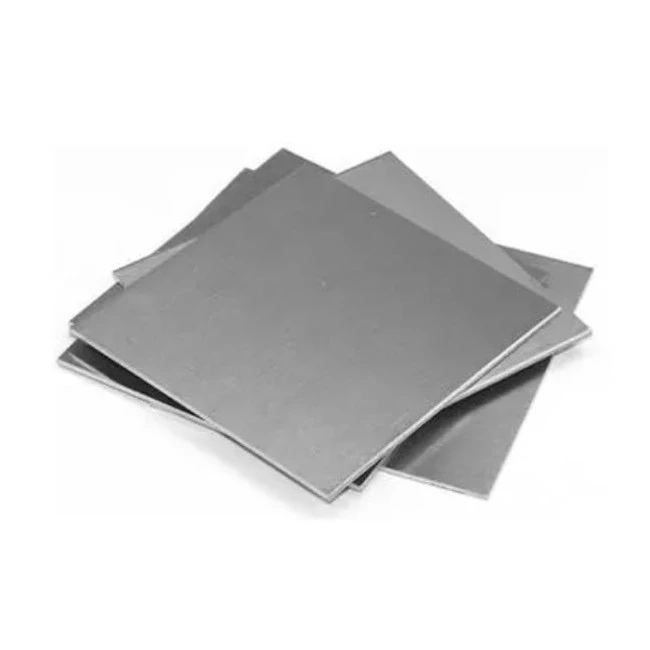
If you are in the market for high - quality pure titanium plates with excellent oxidation resistance, we are here to serve you. We offer a wide range of Titanium Alloy Sheet, Titanium Metal Sheet, and Titanium Alloy Plate products to meet your specific requirements. Whether you are in the aerospace, chemical processing, or medical industry, our products can provide the performance and reliability you need. Contact us today to discuss your procurement needs and start a fruitful business relationship.
References
-ASM Handbook Volume 2: Properties and Selection: Nonferrous Alloys and Special - Purpose Materials
-Schutz, H. (2000). Titanium: A Technical Guide. ASM International.
-Lide, D. R. (Ed.). (2004). CRC Handbook of Chemistry and Physics. CRC Press.


