


As a supplier of Titanium Alloy Rods, one question I often get asked is, "What is the density of a titanium alloy rod?" Well, let's dive right into it and explore this topic in detail.
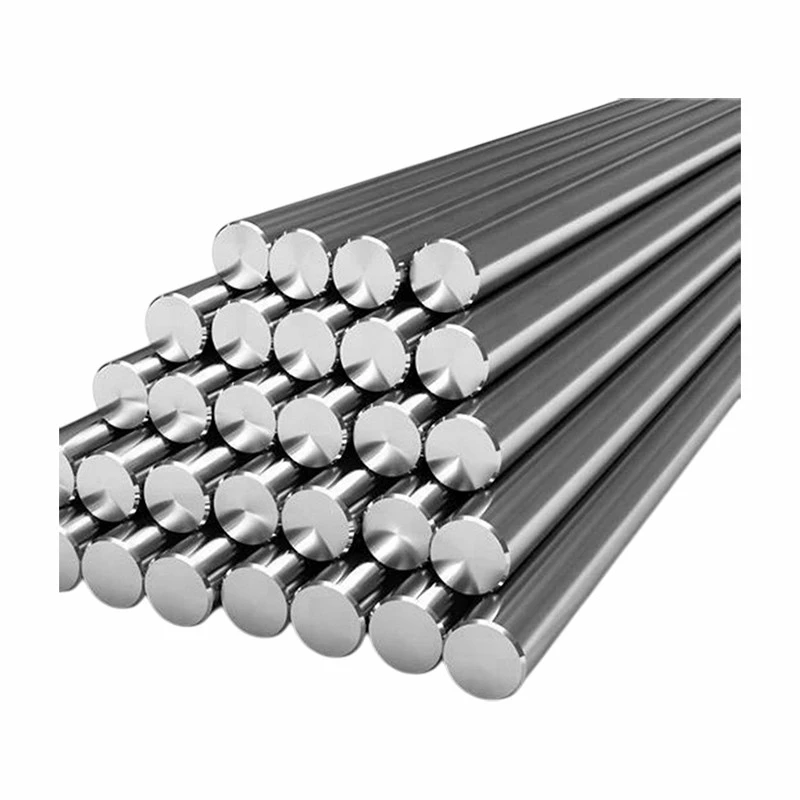

First off, titanium alloys are super popular in a bunch of industries because they've got some amazing properties. They're strong, lightweight, and they can handle corrosion really well. All these features make them perfect for stuff like aerospace, medical devices, and high - end sports equipment.
The density of a titanium alloy rod isn't a one - size - fits - all number. Different alloys have different densities because they're made up of various elements combined with titanium. Generally, the density of pure titanium is around 4.506 g/cm³. But when we start adding other elements like aluminum, vanadium, or molybdenum to make alloys, that density can change.
For example, the most common titanium alloy, Ti - 6Al - 4V, which has 6% aluminum and 4% vanadium, has a density of approximately 4.43 g/cm³. This alloy is a real workhorse in the aerospace industry. It's used for making aircraft frames, engine components, and landing gear. The slightly lower density compared to pure titanium, along with its high strength - to - weight ratio, makes it a top choice for applications where weight reduction is crucial. Saving a little bit of weight in an aircraft can lead to big fuel savings over time.
Another popular alloy is Ti - 5Al - 2.5Sn. This one has a density of about 4.46 g/cm³. It's often used in the medical field because it's biocompatible. That means it can be safely implanted in the human body without causing any adverse reactions. Dental implants and orthopedic devices like hip and knee replacements are some of the things made from this alloy. The density of this alloy is important as it affects how the implant behaves once it's inside the body. A density that's too high or too low could potentially cause problems with the body's natural movement and stress distribution.
Now, why does the density of a titanium alloy rod matter so much? Well, for designers and engineers, the density is a key factor in their calculations. When they're designing a new product, they need to know how much the component made from a titanium alloy rod will weigh. This calculation is essential for ensuring that the final product meets performance requirements. For instance, in a high - speed racing car, every gram matters. Using a titanium alloy rod with the right density can help improve the car's acceleration, handling, and fuel efficiency.
As a Titanium Alloy Rod [/titanium - rod/titanium - alloy - rod.html] supplier, I understand the importance of providing accurate information about density. We work with our customers to make sure they get the alloy that's best suited for their specific needs. Whether they're looking for a lightweight alloy for aerospace applications or a biocompatible one for medical use, we've got the knowledge and the product range to meet their requirements.
In addition to traditional round rods, we also offer Titanium Square Bars [/titanium - rod/titanium - square - bar.html]. The density of these square bars is the same as their round counterparts of the same alloy. Square bars are often used in construction and manufacturing where a flat surface is needed. They can be easier to work with in some cases, especially when it comes to welding or machining.
We also have Titanium Forging Bars [/titanium - rod/titanium - forging - bar.html]. Forging is a process that can improve the mechanical properties of the titanium alloy. The density of a forged bar remains relatively constant compared to a non - forged one of the same alloy. However, the forging process can make the bar stronger and more durable, which is great for applications that require high - strength components, like heavy machinery parts.
When it comes to getting the best titanium alloy rod for your project, it's not just about the density. You also need to consider other factors like strength, corrosion resistance, and cost. We're here to help you navigate through all these considerations. Our team of experts can provide you with detailed information about each alloy and how it performs in different environments.
If you're in the market for titanium alloy rods, titanium square bars, or titanium forging bars, and you want to learn more about density and how it affects your project, don't hesitate to reach out. We're always happy to have a chat and answer your questions. Whether you're working on a small - scale prototype or a large - scale industrial project, we've got the products and the expertise to support you.
When you're choosing a titanium alloy rod, it's also important to think about the manufacturing process. The way we produce the rods can have an impact on their properties, even though the density remains largely determined by the alloy composition. For instance, the heat treatment process can change the microstructure of the alloy, which in turn can affect its strength and ductility.
As a supplier, we take great pride in our quality control measures. We ensure that every titanium alloy rod we supply meets strict quality standards. This includes accurate density measurement. We use state - of - the - art equipment to measure the density of our rods, so you can be confident that you're getting a product with the specified density.
In the aerospace industry, where the margin for error is extremely small, the correct density of titanium alloy rods is crucial. A rod with an incorrect density could lead to structural failures or performance issues. That's why we work closely with aerospace companies to provide them with high - quality rods that meet their exacting requirements.
In the medical field, the density of titanium alloy rods can affect the long - term success of implants. If an implant is too dense, it may cause stress shielding, where the bone around the implant doesn't receive enough stress and starts to weaken. On the other hand, if the density is too low, the implant may not be strong enough to withstand the forces in the body.
We also understand that cost is a major consideration for our customers. While titanium alloys can be more expensive than some other materials, their unique properties often justify the cost. We work hard to offer competitive pricing without compromising on quality. We source our raw materials carefully and optimize our manufacturing processes to keep costs down, which allows us to pass on the savings to you.
So, if you're interested in learning more about the density of titanium alloy rods or any of our products, such as Titanium Square Bars and Titanium Forging Bars, just get in touch. We're looking forward to chatting with you and helping you find the perfect solution for your project. Whether you're a large corporation or a small - time inventor, we've got the right product for you.
References
- "Titanium and Titanium Alloys: Fundamentals and Applications" by A. K. Ghosh and A. R. Manna.
- "Engineering Materials: Properties and Selection" textbook discussions on titanium alloys.


