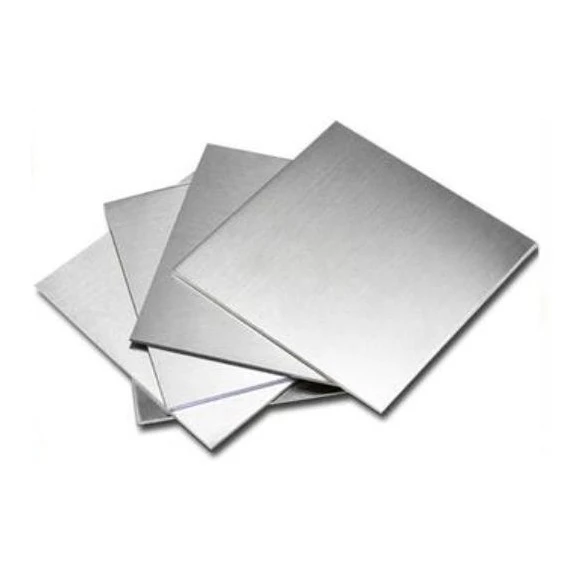
Machining pure titanium plate presents a unique set of challenges that manufacturers and suppliers, like myself, must navigate. As a supplier of Pure Titanium Plate, I've witnessed firsthand the complexities involved in working with this remarkable material. In this blog post, I'll delve into the key challenges faced during the machining of pure titanium plate and explore strategies to overcome them.

High Chemical Reactivity
One of the most significant challenges in machining pure titanium plate is its high chemical reactivity at elevated temperatures. Titanium has a strong affinity for oxygen, nitrogen, and carbon, which can lead to the formation of hard and brittle compounds on the surface of the workpiece. These compounds, known as alpha cases, can significantly reduce the machinability of the material and cause premature tool wear.
During machining, the heat generated by the cutting process can cause the titanium to react with the surrounding atmosphere, forming alpha cases. To mitigate this issue, it's essential to use proper cooling and lubrication techniques. Flood coolant systems are commonly used to dissipate heat and prevent the formation of alpha cases. Additionally, using cutting tools with a low chemical reactivity, such as carbide or ceramic tools, can help reduce the risk of chemical reactions between the tool and the workpiece.
Low Thermal Conductivity
Pure titanium has a relatively low thermal conductivity compared to other metals, such as steel or aluminum. This means that heat generated during machining is not easily dissipated, leading to high temperatures at the cutting edge. The high temperatures can cause the cutting tool to wear rapidly, reduce the tool life, and affect the surface finish of the workpiece.
To address the issue of low thermal conductivity, it's important to use cutting parameters that minimize heat generation. This includes using lower cutting speeds and higher feed rates to reduce the amount of time the tool is in contact with the workpiece. Additionally, using coolant or lubricant can help dissipate heat and reduce the temperature at the cutting edge.
High Strength and Toughness
Pure titanium is a strong and tough material, which can make it difficult to machine. The high strength and toughness of titanium require cutting tools to have high wear resistance and cutting edge strength. Additionally, the high cutting forces generated during machining can cause the workpiece to deform or deflect, leading to dimensional inaccuracies and poor surface finish.
To overcome the challenges posed by the high strength and toughness of pure titanium, it's important to use cutting tools that are specifically designed for machining titanium. Carbide tools with a high cobalt content or ceramic tools are commonly used for machining titanium due to their high wear resistance and cutting edge strength. Additionally, using rigid machining setups and proper fixturing can help reduce the deflection of the workpiece and improve the dimensional accuracy of the machined parts.
Chip Formation and Breakage
Another challenge in machining pure titanium plate is chip formation and breakage. Titanium chips tend to be long and stringy, which can cause them to wrap around the cutting tool and interfere with the machining process. The long chips can also cause the cutting tool to wear rapidly and reduce the tool life.
To improve chip formation and breakage, it's important to use cutting tools with proper chip breakers. Chip breakers are designed to break the chips into smaller, more manageable pieces, which can be easily removed from the cutting zone. Additionally, using proper cutting parameters, such as higher feed rates and lower cutting speeds, can help improve chip formation and reduce the risk of chip wrapping.
Surface Finish and Dimensional Accuracy
Achieving a good surface finish and dimensional accuracy is crucial in machining pure titanium plate. The high reactivity and low thermal conductivity of titanium can make it difficult to achieve a smooth surface finish and tight dimensional tolerances. Additionally, the high cutting forces generated during machining can cause the workpiece to deform or deflect, leading to dimensional inaccuracies.
To improve the surface finish and dimensional accuracy of machined titanium parts, it's important to use proper cutting parameters and cutting tools. Using a sharp cutting tool with a fine edge radius can help reduce the cutting forces and improve the surface finish. Additionally, using a rigid machining setup and proper fixturing can help reduce the deflection of the workpiece and improve the dimensional accuracy of the machined parts.
Strategies for Overcoming the Challenges
While machining pure titanium plate presents several challenges, there are several strategies that can be employed to overcome these challenges. Here are some tips for successful machining of pure titanium plate:
- Use the Right Cutting Tools: Select cutting tools that are specifically designed for machining titanium. Carbide tools with a high cobalt content or ceramic tools are commonly used for machining titanium due to their high wear resistance and cutting edge strength.
- Optimize Cutting Parameters: Use cutting parameters that minimize heat generation and reduce the cutting forces. This includes using lower cutting speeds, higher feed rates, and proper depth of cut.
- Use Coolant or Lubricant: Coolant or lubricant can help dissipate heat, reduce the temperature at the cutting edge, and improve the surface finish of the workpiece.
- Use Proper Fixturing and Rigid Machining Setups: Proper fixturing and rigid machining setups can help reduce the deflection of the workpiece and improve the dimensional accuracy of the machined parts.
- Monitor and Control the Machining Process: Regularly monitor the cutting tool wear, surface finish, and dimensional accuracy of the machined parts. Make adjustments to the cutting parameters or cutting tools as needed to ensure optimal machining performance.
Conclusion
Machining pure titanium plate is a challenging task that requires careful consideration of the material properties and the machining process. The high chemical reactivity, low thermal conductivity, high strength and toughness, chip formation and breakage, and surface finish and dimensional accuracy are some of the key challenges faced during the machining of pure titanium plate. By using the right cutting tools, optimizing cutting parameters, using coolant or lubricant, using proper fixturing and rigid machining setups, and monitoring and controlling the machining process, these challenges can be overcome, and high-quality machined titanium parts can be produced.
If you're interested in purchasing Pure Titanium Plate or have any questions about machining titanium, please feel free to contact us. We're here to help you find the right solutions for your machining needs.
References
- "Machining Titanium and Titanium Alloys" by ASM International
- "Titanium: A Technical Guide" by John R. Davis
- "Manufacturing Engineering and Technology" by Serope Kalpakjian and Steven R. Schmid