


Hey there! I'm a supplier of Pure Titanium Plate, and today I'm super excited to chat with you about how pure titanium plate resists seawater corrosion. It's a topic that's not only fascinating but also super important, especially for industries that deal with the harsh marine environment.
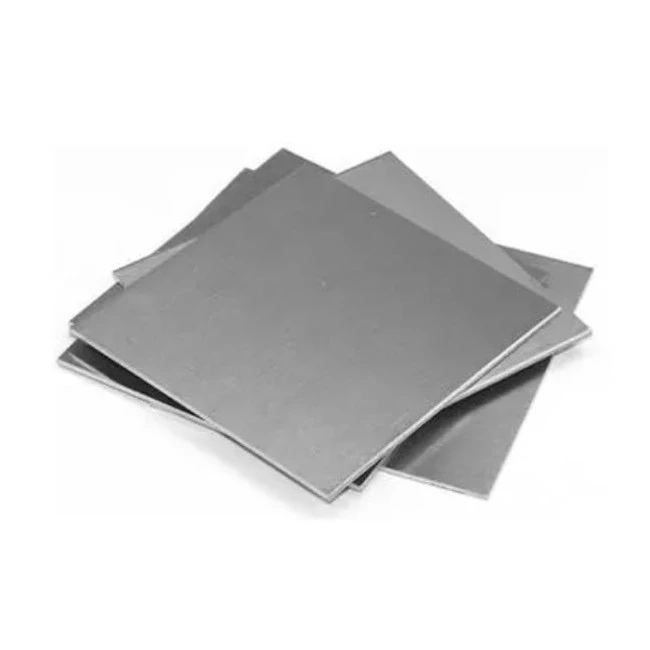
First off, let's talk a bit about what pure titanium is. Pure titanium is a metal that's known for its excellent strength - to - weight ratio, high melting point, and most importantly for our discussion, its outstanding corrosion resistance. When we say pure titanium plate, we're talking about a flat piece of this amazing metal that can be used in a whole bunch of applications, from marine equipment to chemical processing. You can check out our Pure Titanium Plate for more details on what we offer.
Now, seawater is a tough customer. It's a highly corrosive environment full of salts, dissolved oxygen, and various microorganisms. When most metals are exposed to seawater, they start to rust and break down pretty quickly. But pure titanium plate is different. It has a natural ability to form a protective oxide layer on its surface.
This oxide layer is the key to its corrosion resistance. When titanium comes into contact with oxygen, even a tiny amount, it forms a thin, dense layer of titanium dioxide (TiO₂). This layer is extremely stable and adheres tightly to the surface of the titanium. It acts as a barrier, preventing the seawater from directly attacking the underlying metal.
The formation of this oxide layer is a self - healing process. If the layer gets scratched or damaged in some way, as long as there's oxygen present, the titanium will quickly reform the oxide layer. This means that even in the rough and tumble of the marine environment, the pure titanium plate can keep protecting itself.
Another factor that contributes to its resistance to seawater corrosion is the electrochemical properties of titanium. In an electrochemical sense, titanium has a very low corrosion potential in seawater. This means that it's less likely to participate in electrochemical reactions that lead to corrosion. For example, in a typical metal - seawater system, metals can act as anodes in an electrochemical cell, losing electrons and corroding. But titanium has a passive behavior, and it doesn't easily give up its electrons.
In addition to the chemical and electrochemical aspects, the microstructure of pure titanium also plays a role. The uniform and fine - grained structure of the titanium plate provides a more consistent surface for the formation of the oxide layer. It reduces the chances of local corrosion, such as pitting and crevice corrosion, which are common in seawater environments.
Let's take a look at some real - world applications of pure titanium plate in the marine industry. It's widely used in shipbuilding. For example, it can be used for making the hull components, propellers, and heat exchangers of ships. In hull components, the pure titanium plate's corrosion resistance ensures a longer lifespan for the ship, reducing maintenance costs. Propellers made of pure titanium are not only lightweight but also highly resistant to the erosive and corrosive effects of seawater. Heat exchangers, which are crucial for the cooling systems of ships, benefit from the excellent heat transfer properties of titanium as well as its corrosion resistance.
It's also used in offshore oil and gas platforms. These platforms are constantly exposed to seawater and harsh weather conditions. Pure titanium plate can be used for structural components, piping systems, and equipment that come into contact with seawater. By using pure titanium plate, the operators of these platforms can avoid the problems associated with corrosion, such as leaks and structural failures.
If you're in the market for materials that can withstand the challenges of the marine environment, you might also be interested in our Titanium Alloy Sheet and Titanium Metal Sheet. Titanium alloys are made by adding other elements to pure titanium, which can enhance certain properties like strength or hardness while still maintaining good corrosion resistance. Titanium metal sheets, on the other hand, offer different thicknesses and sizes for various applications.
So, if you're thinking about using pure titanium plate, titanium alloy sheet, or titanium metal sheet in your project, don't hesitate to get in touch. Whether you're building a new ship, an offshore platform, or any other marine - related equipment, we can provide you with high - quality products. We understand the importance of corrosion resistance in the marine environment, and we're committed to supplying you with the best materials possible.
In conclusion, pure titanium plate's ability to resist seawater corrosion is a combination of its chemical, electrochemical, and microstructural properties. The self - healing oxide layer, low corrosion potential, and uniform microstructure all work together to make it an ideal material for marine applications. If you have any questions or want to start a procurement discussion, feel free to reach out. We're here to help you find the perfect titanium solution for your needs.

References:
- "Titanium: A Technical Guide" by ASM International.
- "Corrosion Resistance of Titanium Alloys in Seawater" - various research papers from marine engineering and materials science journals.


