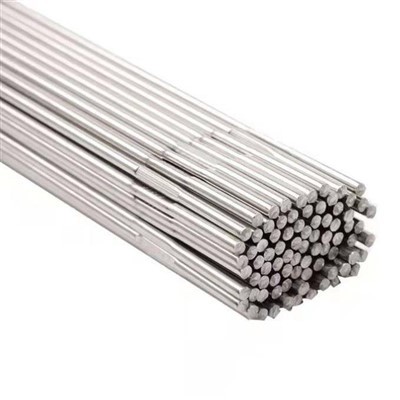
Titanium round rods have gained significant attention in various industries due to their unique set of properties. One of the most crucial aspects that industries often inquire about is their heat resistance. As a supplier of titanium round rods, I am well - versed in the technical details and real - world applications of these products, and I am excited to delve into the topic of their heat resistance.
Understanding Titanium's Basic Properties
Titanium is a remarkable metal. It has a high strength - to - weight ratio, excellent corrosion resistance, and biocompatibility. These properties make it a popular choice in aerospace, medical, and chemical processing industries. When it comes to heat resistance, titanium's atomic structure plays a vital role. Titanium has a relatively high melting point of around 1668°C (3034°F). This high melting point indicates that titanium round rods can withstand high temperatures before they start to melt.
In comparison to other common metals, such as aluminum (melting point of about 660°C or 1220°F) and steel (melting point varying between 1370 - 1510°C or 2500 - 2750°F depending on the alloy), titanium clearly has an edge in terms of its ability to resist melting under high - heat conditions.
Heat Resistance in Different Environments
The heat resistance of titanium round rods can vary depending on the environment in which they are used. In an oxidizing environment, titanium forms a thin, stable oxide layer on its surface at elevated temperatures. This oxide layer acts as a protective barrier, preventing further oxidation and corrosion. For example, in air, titanium round rods can maintain their integrity at temperatures up to about 500 - 600°C (932 - 1112°F) for extended periods. However, as the temperature increases beyond this range, the rate of oxidation accelerates, and the oxide layer may start to break down, leading to a reduction in the rod's mechanical properties.
In a reducing environment, the situation is different. Without the presence of oxygen to form the protective oxide layer, titanium's heat - related behavior can change. In some cases, titanium may react with other elements present in the reducing environment, which could potentially affect its heat resistance. For instance, in a hydrogen - rich environment at high temperatures, titanium can absorb hydrogen, leading to a phenomenon called hydrogen embrittlement, which can compromise the rod's strength and ductility.
Applications Based on Heat Resistance
The heat resistance of titanium round rods makes them suitable for a wide range of applications. In the aerospace industry, they are used in components such as engine parts, where high temperatures are a constant challenge. The ability of titanium round rods to maintain their strength and shape under extreme heat conditions is crucial for the safety and performance of aircraft engines. For example, turbine blades and compressor discs often use titanium alloys because of their heat - resistant properties.
In the chemical processing industry, titanium round rods are used in equipment that handles high - temperature chemical reactions. Their corrosion resistance combined with heat resistance allows them to be used in reactors, heat exchangers, and piping systems. For instance, in the production of certain chemicals where the reaction temperature can reach several hundred degrees Celsius, titanium round rods can ensure the long - term reliability of the equipment.
Impact of Alloying on Heat Resistance
Titanium is rarely used in its pure form. Instead, various alloying elements are added to enhance its properties, including heat resistance. For example, adding elements like aluminum, vanadium, and molybdenum can improve the high - temperature strength and stability of titanium alloys. Titanium Alloy Rod is a prime example of how alloying can be used to optimize heat resistance.
Aluminum, when added to titanium, can increase the alloy's strength at elevated temperatures by forming intermetallic compounds. Vanadium helps to improve the alloy's ductility and toughness, which are important properties to maintain even at high temperatures. Molybdenum, on the other hand, can enhance the alloy's creep resistance, which is the tendency of a material to deform slowly under a constant load at high temperatures.
Real - World Examples of Heat - Resistant Titanium Rod Applications
Let's take a look at some real - world examples of how titanium round rods are used in heat - resistant applications. In the automotive industry, some high - performance vehicles use titanium components in their exhaust systems. The exhaust gases can reach extremely high temperatures, and titanium round rods can withstand these temperatures while also being lightweight, which helps to improve the vehicle's fuel efficiency.
In the power generation industry, specifically in gas turbines, titanium round rods are used in the construction of turbine blades. These blades are exposed to high - temperature combustion gases, and the heat resistance of titanium ensures that they can operate efficiently for long periods without significant degradation.
Limitations and Considerations
While titanium round rods have good heat resistance, there are limitations. As mentioned earlier, in certain environments and at extremely high temperatures, their performance can be affected. Also, the cost of titanium is relatively high compared to other metals. This cost factor needs to be considered when choosing titanium round rods for a particular application.
Another consideration is the manufacturing process of the rods. The heat - treatment process during manufacturing can have a significant impact on the final heat - resistant properties of the rods. Improper heat treatment can lead to inconsistent properties and reduced heat resistance.
Related Products and Their Heat - Resistant Features
We also offer Titanium Forging Bar. Forging is a process that can enhance the internal structure of the titanium, which may improve its heat resistance. The forging process aligns the grain structure of the metal, resulting in better mechanical properties, including improved strength and toughness at high temperatures.


Our Titanium Filler Rod Welding products are also relevant. When welding titanium round rods, the filler rod needs to have similar heat - resistant properties to ensure a strong and reliable weld joint. The filler rods are carefully formulated to match the heat - related performance of the base rods, allowing for seamless integration in high - temperature applications.
Conclusion
In conclusion, titanium round rods generally have good heat resistance. Their high melting point, ability to form a protective oxide layer in oxidizing environments, and the possibility of enhancing heat - related properties through alloying make them a valuable choice for many high - temperature applications. However, it is essential to consider the specific environment, cost, and manufacturing factors when using them.
If you are in need of high - quality titanium round rods for your heat - resistant applications, we are here to assist you. Our team of experts can provide you with detailed information about our products and help you choose the most suitable titanium round rods for your specific requirements. Contact us to start a procurement discussion and find the best solution for your business.
References
-ASM Handbook, Volume 2: Properties and Selection: Nonferrous Alloys and Special - Purpose Materials
-Kaufman, J. G., & Rooy, E. L. (Eds.). (2004). Titanium and Titanium Alloys. ASM International.
-Schutz, G. (2009). Titanium: A Technical Guide. ASM International.