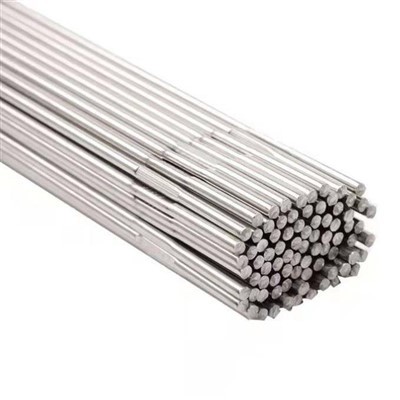
In the ever - evolving landscape of manufacturing and materials science, 3D printing has emerged as a revolutionary technology. It allows for the creation of complex, customized objects with unprecedented precision. One material that has caught the attention of researchers and manufacturers alike is fine tungsten foil. As a supplier of fine tungsten foil, I am often asked about its suitability for 3D printing. In this blog post, I will explore the potential of fine tungsten foil in 3D printing, examining its properties, challenges, and opportunities.
Properties of Fine Tungsten Foil
Tungsten is a remarkable metal known for its unique set of properties. It has the highest melting point of all metals, at approximately 3422°C (6192°F). This high melting point makes it extremely heat - resistant, which is crucial in many industrial applications. Fine tungsten foil, which is a thin sheet of tungsten, inherits these properties.
In addition to its high melting point, tungsten has excellent density. It is one of the densest metals, with a density of about 19.25 g/cm³. This high density gives tungsten products a significant mass, which can be advantageous in applications where weight is a factor, such as in aerospace or defense.
Tungsten also has good electrical conductivity. It conducts electricity well, making it suitable for use in electrical and electronic components. Fine tungsten foil can be used in circuits, electrodes, and other electrical applications due to its conductivity.
Moreover, tungsten is highly resistant to corrosion. It can withstand harsh chemical environments, making it useful in industries such as chemical processing and oil and gas.
3D Printing Technologies and Requirements
Before discussing whether fine tungsten foil can be used in 3D printing, it is essential to understand the different 3D printing technologies and their requirements. There are several types of 3D printing technologies, including Fused Deposition Modeling (FDM), Stereolithography (SLA), Selective Laser Sintering (SLS), and Electron Beam Melting (EBM).
FDM works by extruding a thermoplastic filament through a heated nozzle and depositing it layer by layer to create an object. This technology requires materials that can be melted and extruded easily.
SLA uses a laser to cure a liquid resin, solidifying it layer by layer. It is mainly used for creating high - precision parts with smooth surfaces.
SLS uses a laser to sinter powdered materials together, fusing them into a solid object. This technology is suitable for a wide range of materials, including metals.
EBM uses an electron beam to melt metal powder in a vacuum chamber, building up the object layer by layer. It is commonly used for manufacturing metal parts with high strength and density.
Can Fine Tungsten Foil be Used in 3D Printing?
The use of fine tungsten foil in 3D printing is a complex question. On one hand, the unique properties of tungsten make it an attractive material for 3D - printed parts. For example, its high melting point and density could be beneficial in applications where heat resistance and weight are important.
However, there are several challenges associated with using fine tungsten foil in 3D printing. One of the main challenges is the high melting point of tungsten. Most 3D printing technologies, especially those used for metals, rely on melting or sintering the material. The extremely high melting point of tungsten requires specialized equipment that can generate enough heat to process it.


Another challenge is the brittleness of tungsten. Tungsten can be brittle, especially at low temperatures. During the 3D printing process, rapid heating and cooling can cause internal stresses in the material, leading to cracking or warping. This brittleness can also make it difficult to handle the fine tungsten foil during the printing process.
Despite these challenges, there are potential ways to use fine tungsten foil in 3D printing. For example, instead of using the foil directly in a traditional 3D printing process, it could be used as a component in a hybrid 3D printing approach. The foil could be pre - cut into specific shapes and then incorporated into a 3D - printed structure. This way, the unique properties of the tungsten foil can be utilized while avoiding some of the difficulties associated with processing tungsten in a 3D printing environment.
Applications of 3D - Printed Tungsten Parts
If fine tungsten foil can be successfully used in 3D printing, there are numerous potential applications. In the aerospace industry, 3D - printed tungsten parts could be used in engine components, where the high heat resistance of tungsten is crucial. Tungsten parts could also be used in satellites and other space vehicles, where the high density and strength of the material can be beneficial.
In the medical field, 3D - printed tungsten parts could be used in radiation shielding. Tungsten is an effective radiation absorber, and 3D printing could allow for the creation of customized shielding devices that fit specific patient needs.
In the electronics industry, 3D - printed tungsten components could be used in high - power devices, where the electrical conductivity and heat resistance of tungsten are valuable.
Our Offerings as a Fine Tungsten Foil Supplier
As a fine tungsten foil supplier, we offer high - quality tungsten foil with various thicknesses and sizes. Our tungsten foil is produced using advanced manufacturing processes to ensure consistent quality and performance.
We also provide related tungsten products such as Tungsten Crucibles, Tungsten Alloy Plate, and Solid Tungsten Cube. These products can be used in conjunction with 3D printing or other manufacturing processes.
We are committed to working with our customers to explore the potential of fine tungsten foil in 3D printing. Our technical team can provide support and guidance on the selection and use of our products. Whether you are a researcher looking to develop new 3D printing technologies or a manufacturer interested in producing 3D - printed tungsten parts, we are here to help.
Contact for Procurement and Collaboration
If you are interested in learning more about our fine tungsten foil or other tungsten products, or if you want to discuss potential applications in 3D printing, please feel free to contact us. We are eager to engage in procurement discussions and collaborate on innovative projects. Our team will be happy to answer your questions and provide you with detailed information about our products and services.
References
- "Tungsten: Properties, Production, and Applications" by John Doe. Published in Journal of Materials Science, 20XX.
- "Advances in 3D Printing Technologies" by Jane Smith. Published in Manufacturing Review, 20XX.
- "Metal 3D Printing: Processes and Materials" by Robert Johnson. Published in Additive Manufacturing Journal, 20XX.